



.png)


It's one of the most practical questions a denture wearer ends up asking, usually a year or two in: is this normal, or is it time to get this looked at? There's a genuinely useful general answer, plus a handful of things that push people earlier or later than that general answer suggests. Knowing both halves is more useful than just memorizing a number.
The General Guideline
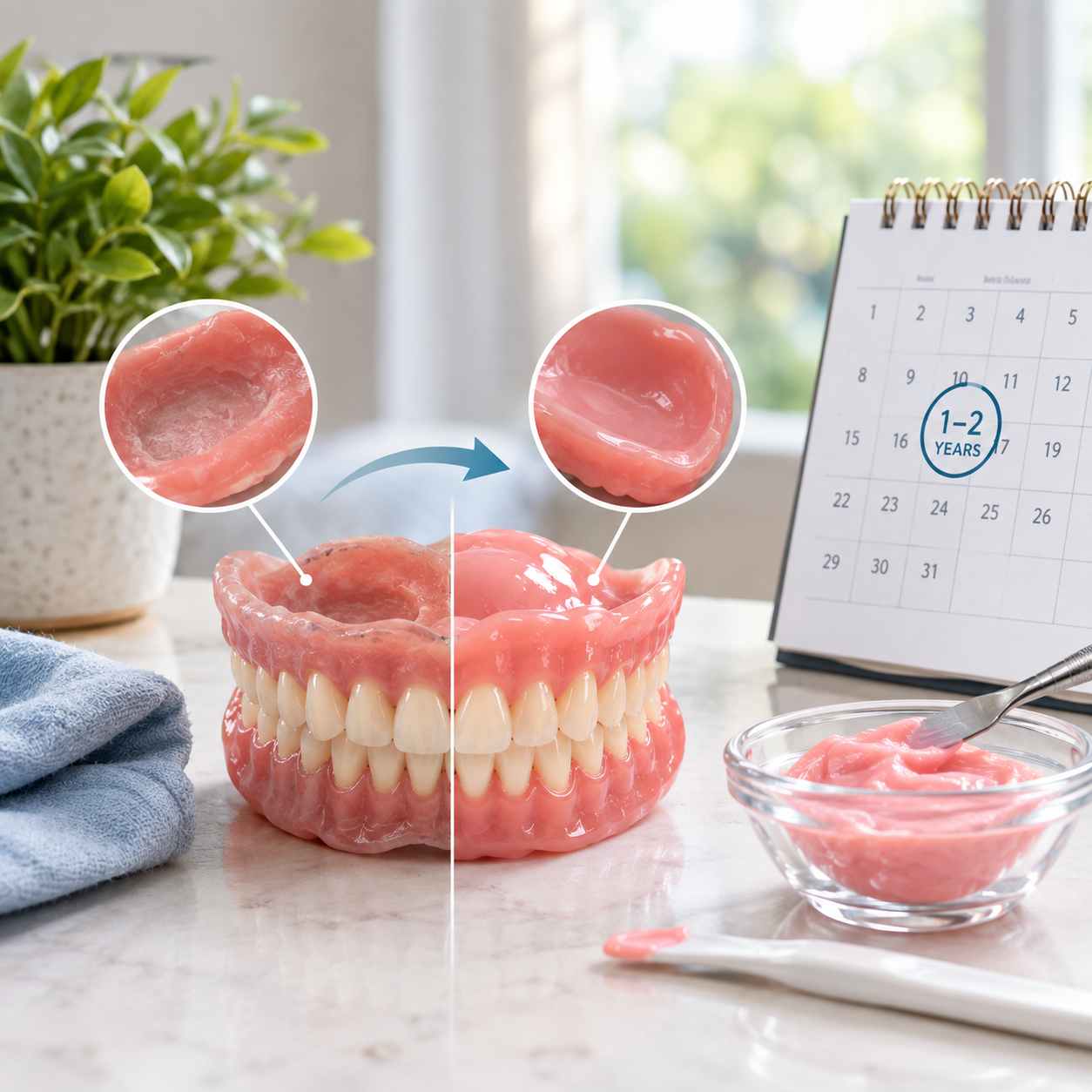
According to the Cleveland Clinic's overview of denture types, care, and maintenance, dentures should typically be relined every one to two years, or sooner if you notice a change in how they fit.
That "or sooner" matters as much as the number does. The one-to-two-year window is a starting point for scheduling a check, not a guarantee that your denture will feel fine right up until the day it hits that mark.
Why This Needs Doing at All
A denture that fits perfectly on day one doesn't necessarily fit the same way three years later, and that's not a manufacturing issue.
According to WebMD's overview of dental implant surgery and denture comparisons, gums change shape to fill in where teeth used to be, and they continue changing shape over time, which is why dentures tend to loosen and shift and why dentists recommend having them periodically realigned.
Your gums and the bone underneath them aren't a fixed mold. They keep remodeling in the background for years, which means the denture that was custom-built for your mouth at one point in time is gradually being built for a mouth that no longer exists in quite the same shape.
What Speeds This Up or Slows It Down
The one-to-two-year window isn't the same for everyone, and a few things shift it in either direction:
- How recently you started wearing dentures. Change tends to be fastest in the first year or two, when the bone that used to hold your natural teeth is still settling into its new shape. It's common to need more than one adjustment in that first stretch even if nothing feels wrong, exactly why follow-up visits are usually built into the first year rather than left up to you to schedule. Relines tend to space out once that initial settling slows down.
- Your rate of bone loss. This varies by person and isn't something anyone can fully predict in advance.
- How much you're using them. Regular chewing and normal wear play a role, same as with most things you use daily.
- Overall health. Conditions that affect bone density or healing can change the pace either way.
- Which type of reline you had last. A soft reline is a shorter-term cushion and tends to need revisiting sooner than a hard reline, which is built to last longer between adjustments.
Reline vs. Replacement: Not the Same Question
It's easy to conflate "when do I need a reline" with "when do I need new dentures," but they're answering different problems. A reline refreshes the surface that touches your gums, resurfacing the base with new material without changing the teeth or the denture's overall design. Replacement means the denture's materials or teeth have worn down enough, or the design no longer matches your mouth closely enough, that starting fresh serves you better than adjusting what you have.
According to Cleveland Clinic's same overview cited above, the average denture lasts seven to ten years before replacement becomes the better option, while WebMD's guide puts full replacement at roughly every five to eight years.
Either range puts denture replacement on a much longer cycle than relining. In practice, most people go through several relines over the life of one set of dentures, not the other way around.
Signs Worth Acting On Regardless of the Calendar
A few things worth a call to your denturist even if you're well within the "normal" window:
- The denture feels noticeably looser than it did a few months ago
- You're reaching for adhesive more than you used to
- A specific spot on your gums is consistently sore or irritated
- Chewing on one side feels different or less stable than the other
None of these mean anything is wrong with the appliance itself. Most of the time, they just mean your mouth has changed enough that the fit needs to catch up, which is exactly what a reline is for.
A Practical Note on Coverage
Reline frequency isn't purely a clinical question, it's sometimes a coverage question too. Many dental insurance plans and Medicaid dental programs place their own limits on how often a reline is covered, separate from what's clinically ideal, and those limits vary by plan and by state. If cost is part of what's making you hesitate, it's worth a quick call to check your specific insurance and financing options before assuming the answer.
The Bottom Line
Every one to two years is the number to keep in the back of your mind, but your gums don't actually watch the calendar. If something feels different, that's worth more weight than the schedule. A denture that's slightly off for six months isn't just uncomfortable in the meantime, it's also putting uneven pressure on gum tissue that's already changing shape, which rarely fixes itself by waiting longer. Getting it checked costs you a short visit either way, and it's a lot cheaper than waiting for a small fit problem to turn into a bigger one.

