





Common Problems With Full Dentures and How to Fix Them
Almost every full denture wearer runs into at least one of these at some point, usually within the first few months. Most aren't emergencies, and most have a specific, known fix, not just "give it time" as the only answer, even though time does play a real role in a few of them.
Looseness or Slipping
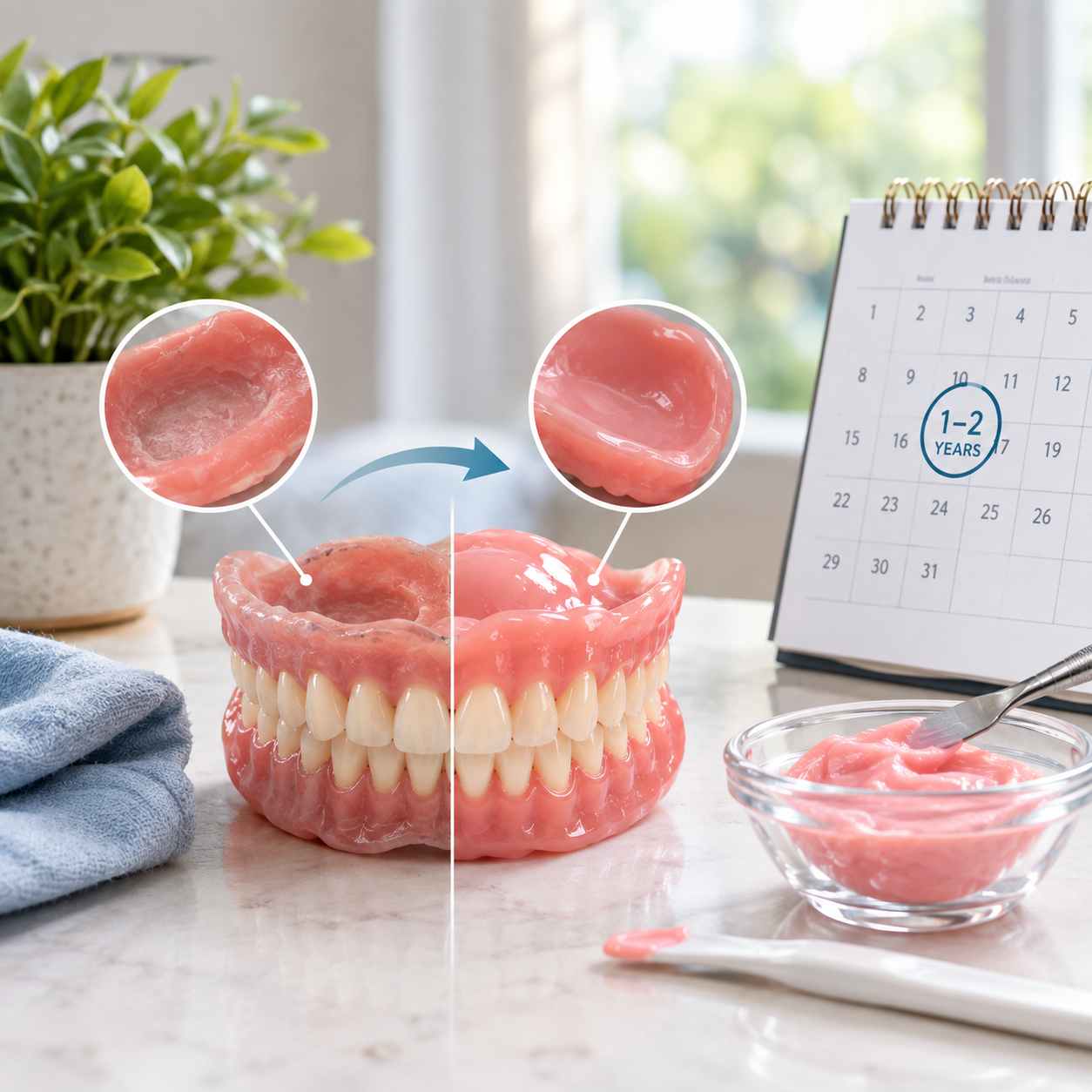
This is the most common complaint, and it's usually not a manufacturing issue. Gums and the bone underneath them change shape gradually, which means a denture that fit perfectly at first can loosen over months or years. We've written a full breakdown of why bone changes cause loose dentures and what to do about it, but the short version is: occasional looseness responds to adhesive, persistent looseness usually needs a reline.
Sore Spots and Gum Irritation
A denture that presses unevenly on your gums creates friction, and friction creates sore spots, sometimes in the same place over and over. Our guide to relieving gum irritation from dentures covers this in detail. The quick version: occasional soreness during the adjustment period is normal, but a spot that keeps coming back in the same place usually means that specific area needs to be adjusted, not just soothed.
General Discomfort That Doesn't Go Away
Sometimes it's not one clear symptom, just a denture that never quite feels right. That's its own category, and we've covered the most common underlying causes in our piece on understanding denture discomfort.
According to the Cleveland Clinic's overview of denture types, care, and maintenance, it can take weeks or sometimes months to get used to new dentures, and several adjustments during the first couple of weeks are a normal part of reaching a comfortable fit.
That's worth repeating here because it's easy to mistake normal early adjustment for something being wrong.
Clicking Sounds When You Talk or Eat
This one gets less attention than looseness or soreness, but it's common, especially early on. A soft clicking noise usually means the denture is momentarily losing full contact with your gums, often because the teeth are set slightly differently than your natural bite was, or because the denture just hasn't fully settled into daily use yet. In most cases, this fades with a short adjustment period as your muscles learn to hold the denture steady. If it's still happening consistently after several weeks, it's usually a sign the bite needs a minor adjustment rather than something you have to live with.
Gagging, Especially With Upper Dentures
Gagging tends to come from one of two places: the back edge of an upper denture extending further onto the palate than your particular mouth tolerates well, or simply not being used to something covering that part of your mouth yet. For most new wearers, this eases within days to a couple of weeks as sensitivity adjusts. If it doesn't ease up, a denturist can often modify the extension or thickness of that back edge, which resolves it for the vast majority of people who experience it, without needing to redesign the whole denture.
Speech That Still Feels Off
A little slurring or trouble with certain sounds is common early on, and it's a big enough topic that it gets its own dedicated guide covering what's normal and how long it typically takes to resolve.
Persistent Bad Breath or an Odd Taste
This one gets attributed to all sorts of things, but the most common cause is simply buildup that daily brushing alone doesn't fully remove, especially in the tiny grooves between artificial teeth and the base. Denture material is slightly porous, which means odor-causing bacteria have more surface to cling to than natural teeth ever gave them. A daily soak in a proper denture cleanser, not just brushing, usually clears this up within a few days. If it doesn't, it's worth having your denturist check for a less obvious cause, like a hairline crack that's trapping bacteria somewhere brushing can't reach.
When to Stop Waiting and Get It Checked
A few things are worth a call regardless of which problem you're dealing with:
Anything that hasn't improved at all after several weeks
A sore spot in the exact same location more than once
Clicking or slipping that's gotten worse instead of better
Any pain sharp enough to make you avoid wearing the denture
Odor or taste issues that don't clear up with a few days of proper soaking
None of these are unusual as one-off complaints. What matters is the trend. If something is getting better on its own, that's a normal adjustment. If it's staying the same or getting worse, that's a denturist visit, not more patience.

