




A damaged denture does not always mean you need a completely new one. In many cases, a broken tooth, small crack, loose component, or change in fit can be addressed through professional denture repair. The difficult part is knowing when repair makes sense and when continued use of an older appliance is no longer practical.
Trying to judge this by appearance alone can be misleading. A denture may look usable but still have structural damage that affects the bite, chewing function, or support against the gums. On the other hand, a visible chip or minor fracture may be repairable without replacing the entire prosthesis.
The right answer depends on the location and severity of the damage, the condition of the denture base, the amount of wear, and whether the appliance still suits the current shape of your mouth. Understanding these factors can help you make a more informed decision when a denture problem appears.
When a Denture Can Usually Be Repaired
Many common denture problems can be corrected when the appliance remains structurally sound. Professional denture repair is often appropriate when damage is limited to a specific area and the rest of the prosthesis continues to provide acceptable function.
A fractured denture base is one example. Depending on the location and extent of the fracture, the broken sections may be joined and restored. A damaged artificial tooth may also be replaced without making an entirely new denture.
The age and condition of the appliance still matter. A repair may restore a denture that is otherwise in good shape, but repeated breakage may indicate that the base has become weakened or that the fit has changed.
This is why an evaluation should come before deciding that a repair is either possible or necessary.
Cracked Denture Bases Need Careful Evaluation
A crack in the acrylic base can range from a small surface fracture to a complete break across the prosthesis. The visible damage does not always show how much stress the denture has experienced.
Small Cracks
A limited crack may be suitable for professional repair when the surrounding material remains stable and the denture still fits the mouth properly.
Major Fractures
A denture that has broken into several pieces may still be repairable in some cases, but the result depends on whether the original relationship between the parts can be restored correctly.
Patients should avoid continuing to wear a cracked appliance for extended periods. Movement around the damaged area can increase stress and may make the break worse.
Attempting a household repair is also a poor substitute for professional treatment. Products such as super glue can interfere with later repair work and may introduce materials that were never intended for use inside the mouth.
Broken Denture Teeth Are Often Repairable
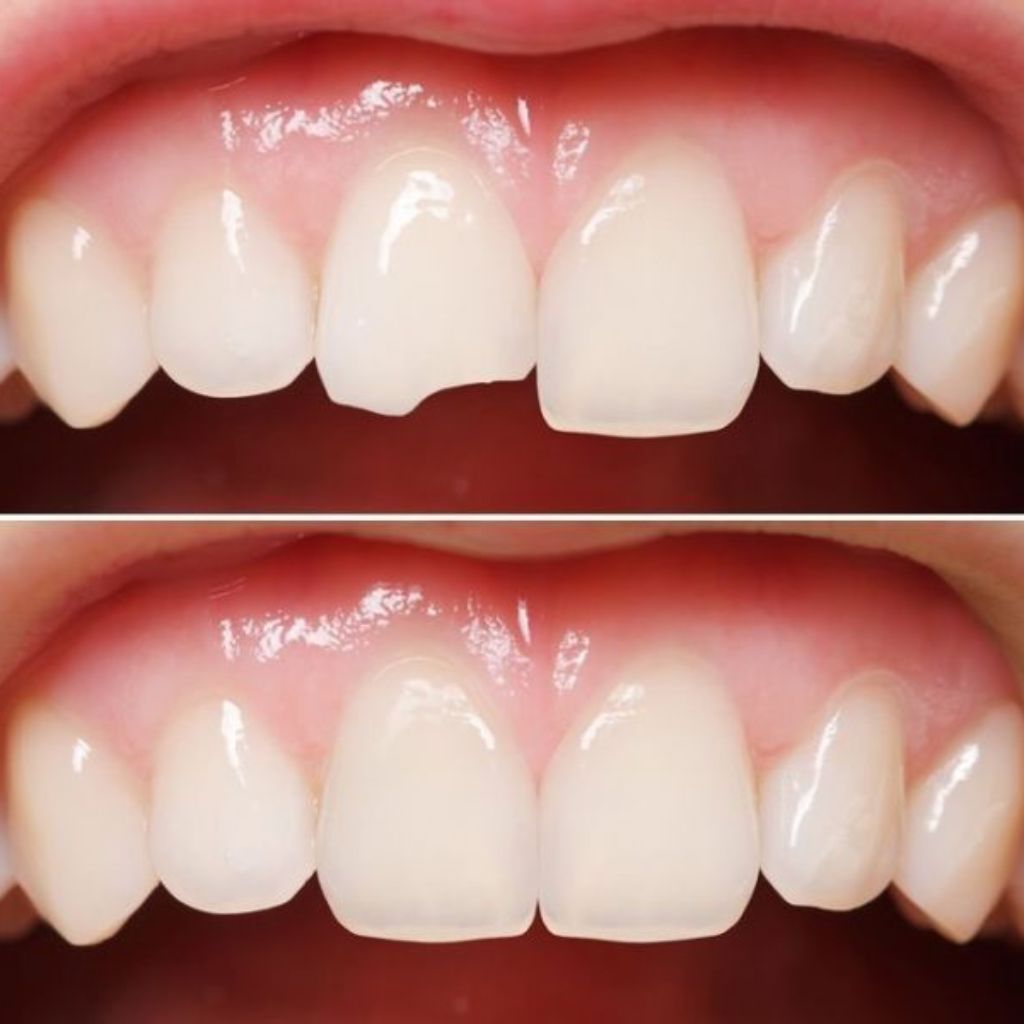
Artificial teeth can chip, crack, or break after years of use. Hard foods, accidental drops, and repeated chewing forces can all contribute to damage.
A single broken tooth does not automatically mean the entire denture needs to be replaced. In many cases, the damaged tooth can be removed and a replacement tooth can be attached to the existing base.
This type of repair can restore:
- Chewing function
- Tooth shape
- Bite contact
- Speech support
- Overall appearance
The surrounding denture should still be examined before repair begins. If several teeth are heavily worn, the base is damaged, or the bite has changed substantially, a replacement may provide a better result than repairing one component at a time.
New Smile Dentures lists tooth repair as one of its denture maintenance services, including replacement of damaged denture teeth.
Loose Dentures May Need More Than Repair
A denture becoming loose does not necessarily mean that the denture itself is broken. In many cases, the supporting gums and jaw have changed since the appliance was made.
After tooth loss, the bone beneath the gums gradually changes. Because a removable denture rests on this foundation, changes in the shape of the ridge can affect retention and stability.
Common signs include:
- Increased movement while eating
- More adhesive use than before
- Food collecting beneath the denture
- Repeated sore areas
- Changes in speech
- Difficulty keeping the denture seated
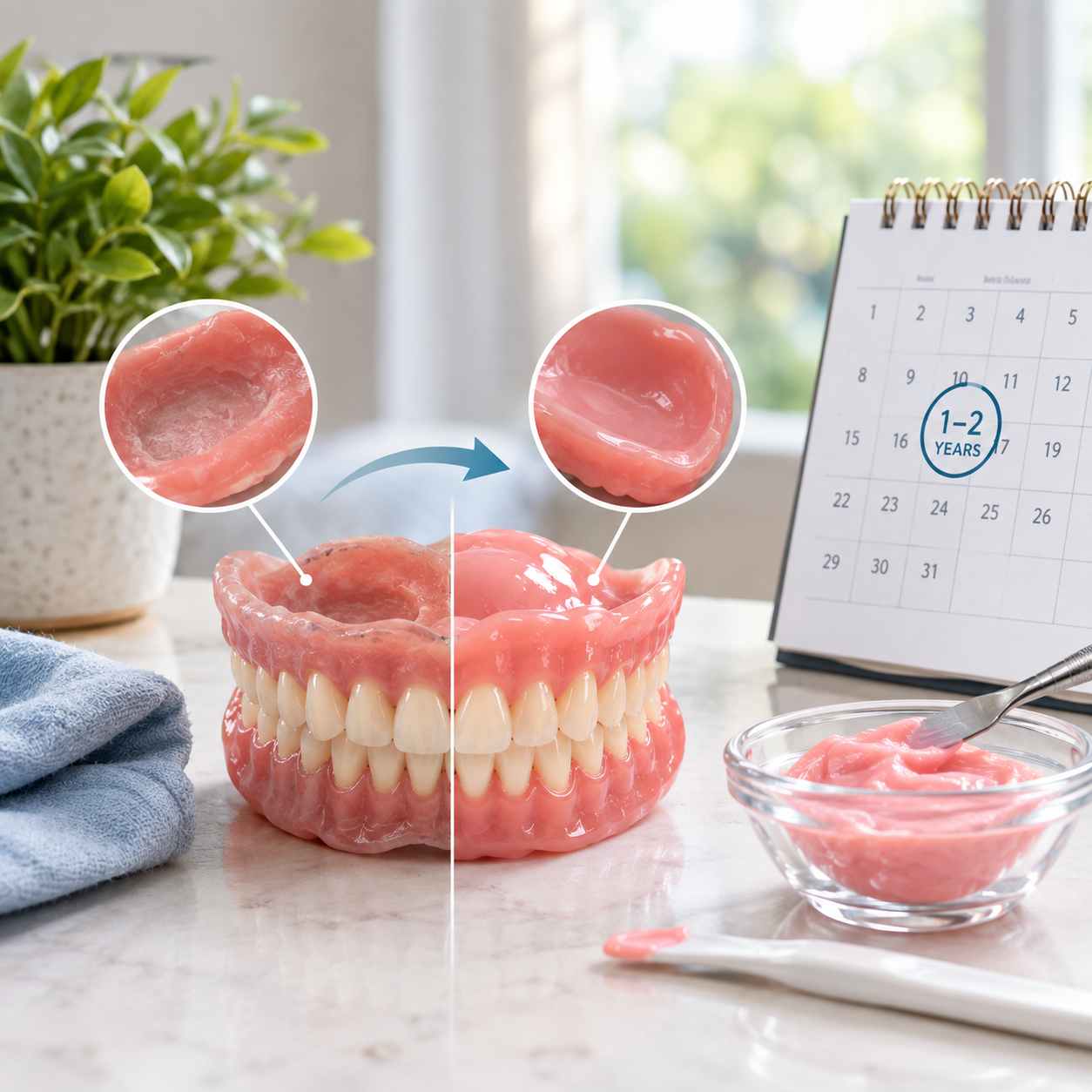
When the appliance is structurally sound but no longer fits the mouth as well as it once did, a denture reline may be considered. A reline modifies the tissue side of the existing denture to better match the current shape of the supporting tissues.
New Smile Dentures provides both chairside and laboratory reline services, along with permanent soft reline options.
When a Denture Reline Makes More Sense
A reline and a repair solve different problems.
Repair addresses physical damage such as a fracture or broken tooth. A reline addresses a change in the fit between the denture and the oral tissues.
Signs of a Possible Reline
A reline may be worth discussing when the denture:
- Feels loose but is not cracked
- Moves during meals
- Creates recurring pressure areas
- Requires more adhesive
- No longer follows the shape of the gums closely
A reline cannot correct every denture problem. If the artificial teeth are heavily worn, the base is badly damaged, or the overall design no longer works well for the patient's current needs, replacement may be more appropriate.
New Smile Dentures notes that relines address changes in fit as the mouth changes over time, which is different from replacing an entire denture.
Tooth Additions Can Restore a Partial Denture
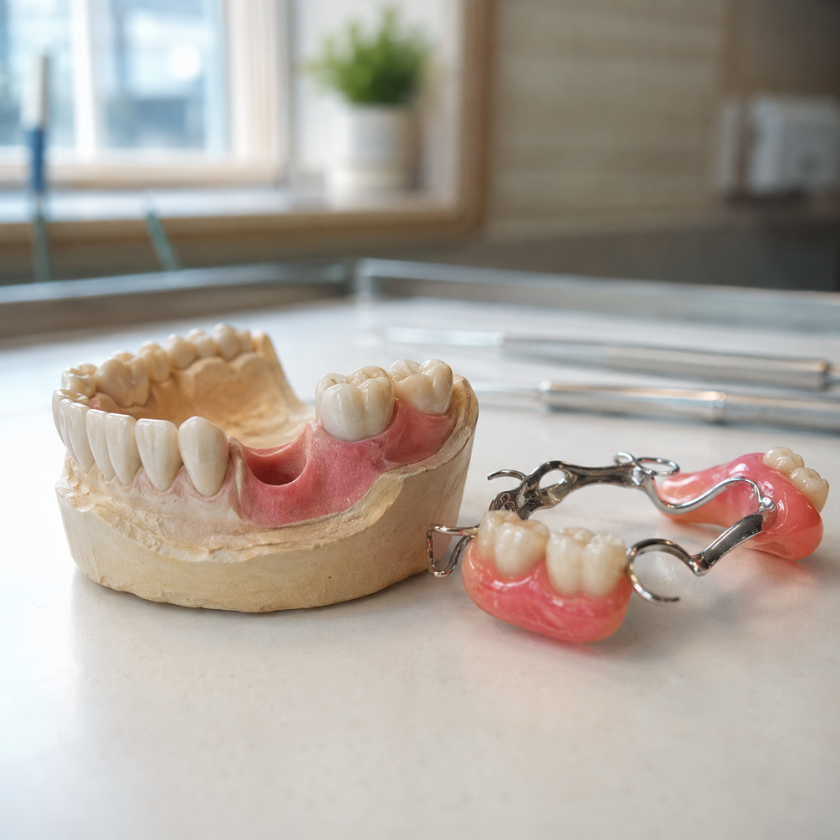
Partial dentures present another repair situation. Sometimes a patient loses an additional natural tooth after the original partial denture was made.
That does not always mean the entire partial denture has to be replaced.
In selected cases, an additional artificial tooth can be added to the existing appliance. The feasibility depends on the framework, available space, tooth position, and overall condition of the partial denture.
When a Tooth Addition May Work
A tooth addition can be considered when the existing framework remains suitable and the new tooth can be incorporated without compromising function.
When Replacement May Be Better
If the framework no longer fits correctly or several changes have occurred, a new partial denture may provide a better long term solution.
New Smile Dentures currently lists tooth addition among its repair services, making this an important option for patients with changing partial denture needs.
Adjustments Can Solve Smaller Problems
Not every denture complaint involves visible damage. Sometimes the issue is related to the way the appliance contacts the gums or how the upper and lower teeth meet.
A professional adjustment may help with:
- A small pressure area
- Minor bite interference
- Localized gum irritation
- Slight movement
- Comfort problems after delivery
This is especially relevant for newer dentures. Immediate dentures, for example, are placed around the time of extraction, when the gums and supporting tissues are still changing. As healing progresses, the fit can change and adjustments or relining may become necessary.
An adjustment should be based on examination rather than trial and error at home.
Signs That Replacement May Be the Better Choice
There comes a point when repeated repair no longer makes practical sense. The decision depends less on a specific number of years and more on the condition of the appliance and the mouth.
Replacement may be considered when:
- The denture has extensive structural damage
- Artificial teeth are heavily worn
- The bite has changed substantially
- The appliance has required multiple repairs
- The fit remains poor after maintenance
- The denture no longer supports comfortable chewing
- The underlying oral anatomy has changed significantly
An older denture may also have design limitations that cannot be solved through a simple repair.
In these cases, starting with a new denture can provide a better foundation than continuing to modify an appliance that has reached the end of its useful service.
Age Alone Does Not Decide the Outcome
People often ask how many years a denture should last. There is no universal expiration date that applies to every patient.
Some dentures remain serviceable for several years with appropriate care and maintenance. Others require earlier intervention because of changes in oral anatomy, damage, wear, or changing functional needs.
The important question is not simply how old the denture is. The better questions are:
Is it still fitting properly?
Can you eat comfortably?
Are the teeth excessively worn?
Are sore spots recurring?
Has the denture been repaired several times?
Does the appliance still match the current shape of your mouth?
These questions provide a more useful basis for deciding between denture repair, a reline, an adjustment, or replacement.
What You Should Never Do With a Broken Denture
A broken denture can create a strong temptation to fix the problem immediately at home. Household adhesives, heated water, sanding, drilling, and cutting can create additional damage.
Do not attempt to:
- Glue broken pieces together
- File down pressure areas yourself
- Bend metal components
- Heat the denture to reshape it
- Continue using a sharp or fractured section
- Force the denture into position
Even when the result appears acceptable, an incorrect repair can change the bite or introduce new pressure points.
A professional examination provides a safer way to determine whether the appliance can be repaired and what type of correction is appropriate.
Choosing Repair or Replacement With Confidence
The best decision comes from looking at the entire denture rather than focusing on one damaged area.
A minor fracture in an otherwise healthy appliance may call for repair. A loose denture with a sound base may benefit from a reline. A partial denture may be modified when another tooth is lost. A worn and repeatedly repaired appliance may be better replaced.
New Smile Dentures provides a range of denture maintenance services, including adjustments, cleaning, tooth repair, tooth additions, broken denture repair, and multiple reline options.
The right treatment therefore depends on the condition of both the denture and the mouth supporting it.
Conclusion
A broken denture does not automatically mean starting over. Many common problems can be addressed through professional repair, adjustment, relining, or tooth replacement, provided the existing appliance is still structurally suitable. The key is identifying the actual cause of the problem rather than treating every symptom in the same way.
A crack may call for repair. A change in fit may point toward a reline. A lost tooth may sometimes be added to a partial denture. Extensive wear, repeated breakage, or major changes in fit may indicate that replacement makes more sense.
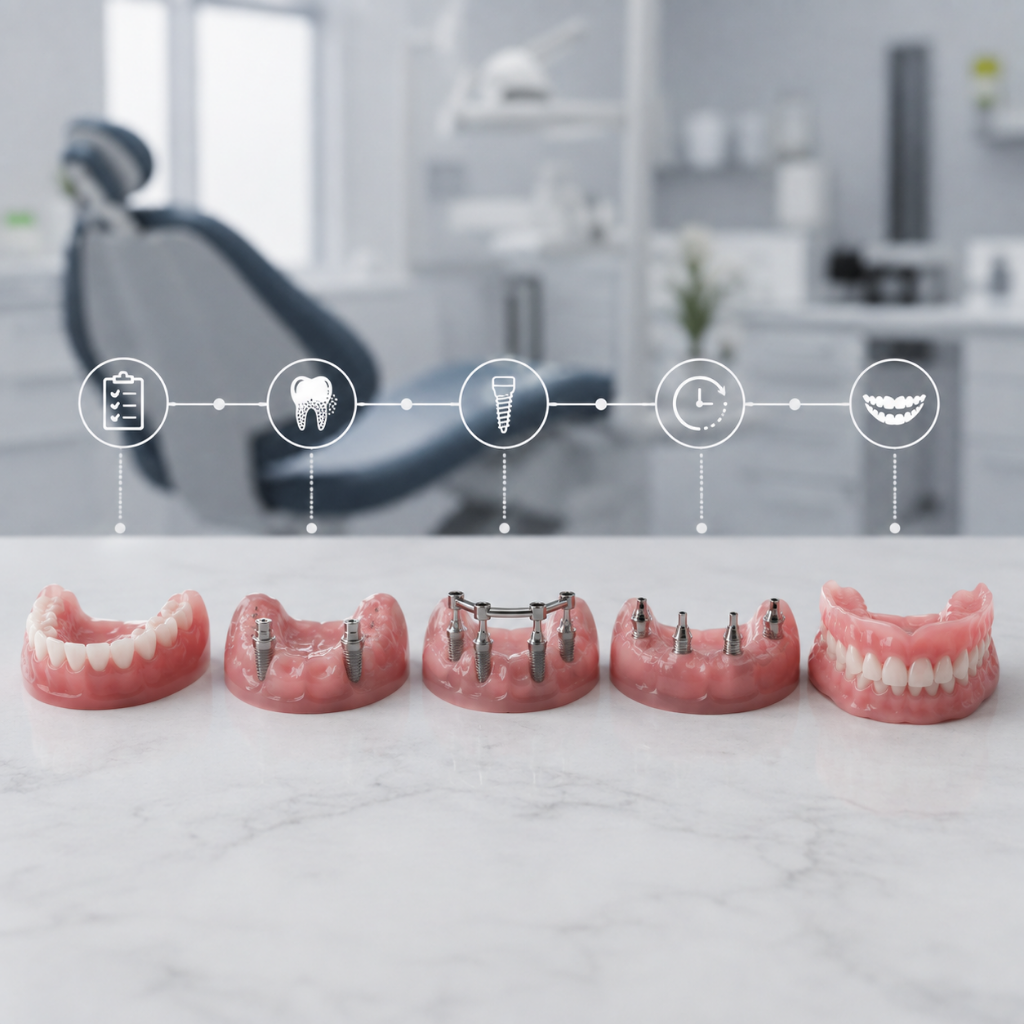
For patients considering denture repair in Caldwell or throughout the Treasure Valley, New Smile Dentures provides repair and reline services alongside full, partial, immediate, and implant supported denture options. The practical starting point is an evaluation that considers the condition of the appliance, the health of the supporting tissues, and the patient's current functional needs.

