


.png)


What's Actually Changing
Your Jawbone Keeps Reshaping
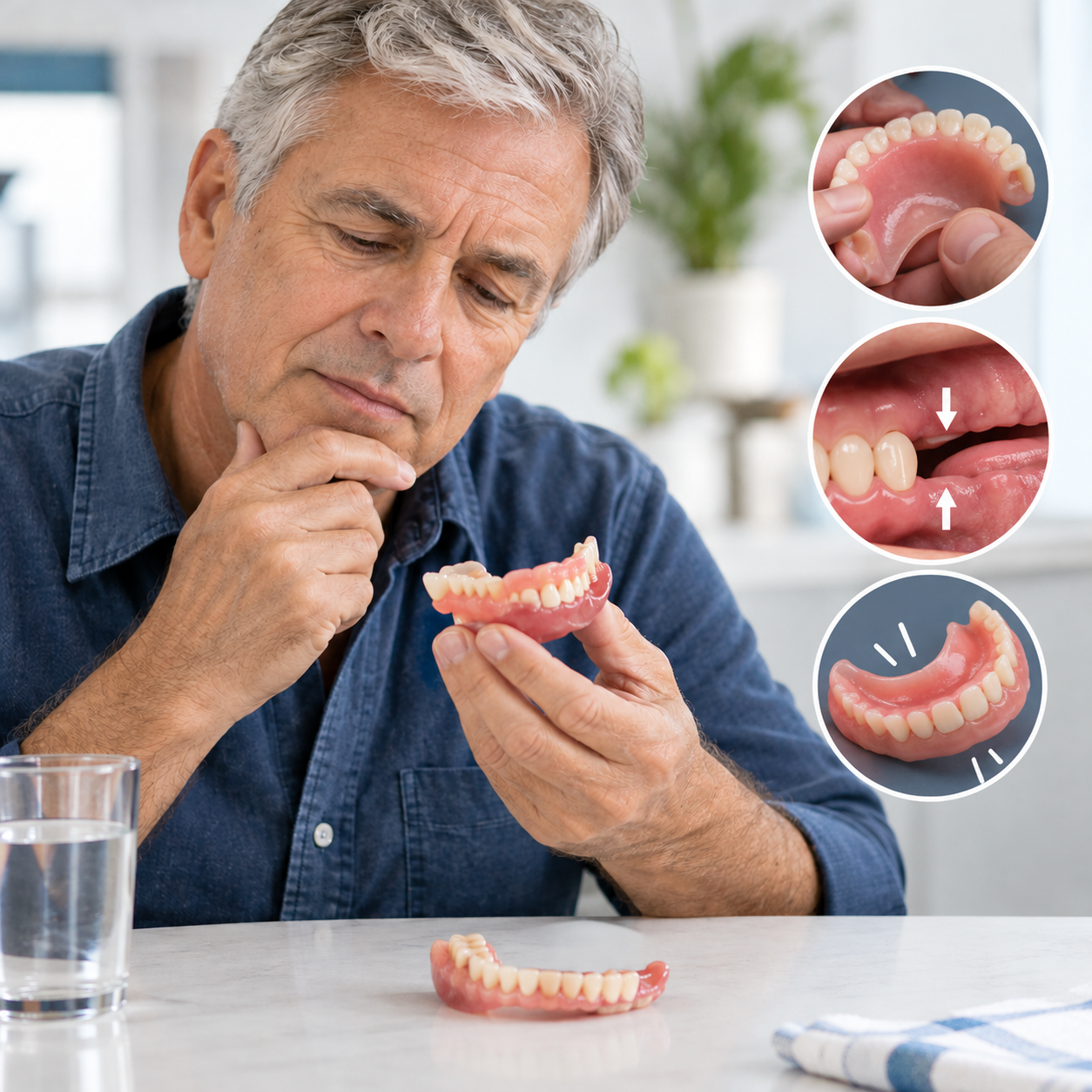
Natural tooth roots send chewing pressure into the jawbone, and that pressure is part of what tells your body to maintain the bone. Once the roots are gone, that signal stops, and the ridge that once held your teeth slowly thins and flattens. A conventional denture rests on top of that ridge, so when the ridge changes shape, the denture's seat changes with it.
According to the Cleveland Clinic's overview of denture types, care, and maintenance, many traditional denture wearers find that their appliances shift, wobble, or slip out of place when they speak or chew, and the jawbone gradually shrinks following tooth loss.
Bone isn't the only moving part. The soft tissue the denture rests on changes as well, and a
We go deeper on this side of the story in our guide to tooth bone loss and loose dentures.
Your Gums Change Toodenture made for last year's gums is a slightly different fit on this year's.
According to the American Dental Association's guidance on denture care and maintenance, dentures can become ill-fitting as a person's gums change over time, and a denture that feels loose may need to be relined or replaced, since ill-fitting dentures can contribute to mouth sores and, with prolonged use, bone loss.
That last part is worth sitting with. A loose denture isn't only annoying, it can speed up the very changes that loosened it. Saliva plays a quieter role too: a thin film of it does much of the holding, so a mouth that's become drier, from medication or otherwise, can make the same denture feel less secure.
The Denture Itself Wears
Acrylic teeth flatten with years of chewing, and the base can thin, crack, or lose its shape. Heat is a classic culprit. Dentures should never go into hot or boiling water, which can warp them. A warped base no longer matches your mouth, and no amount of adhesive changes that. Our guide to what can and can't be repaired covers when damage is fixable.
A Rough Timeline
Every mouth runs on its own clock, but the pattern tends to look like this:
- First weeks: Several adjustment visits are normal while your mouth settles in. That's getting used to a new appliance, not the long-term drift.
- First year or two: The tissue underneath is still reshaping, so fit changes fastest here. An early reline is common and doesn't mean anything went wrong.
- Every year or two after that: Gradual change continues, and periodic relining keeps the fit current.
- Five years and beyond: Wear starts to matter as much as bone and gum changes.
According to the Cleveland Clinic's overview of denture types, care, and maintenance, the average denture lasts seven to ten years, and a reline is recommended every one to two years or whenever you notice a change in how the denture fits.
The practical takeaway is that relining isn't a sign of failure. It's maintenance on a schedule your mouth sets. We break that down further in how often dentures should be relined.
Why Adhesive Isn't the Answer
Adhesive is a reasonable bridge between appointments. It's a bad long-term plan.
According to the American Dental Association's guidance on denture care and maintenance, denture adhesives are not a remedy for ill-fitting dentures, and the American College of Prosthodontists recommends evaluation for replacement when adhesive is needed to eat, is used more than once a day, or when it has been more than five years since the denture was made.
If you've started using adhesive daily just to keep the denture in place, that's the signal to book a fit check, not buy a bigger tube.
What Actually Fixes It
The right fix depends on which of the four drivers is doing the most work:
- A reline adds fresh material to the surface that touches your gums, bringing the fit back in line with your changed tissue. It's the standard answer for gradual looseness. Learn more about denture repairs and relines.
- A repair or rebase makes sense when the base itself is cracked or worn but the teeth are still in good shape.
- A replacement is usually the call when the denture has worn out, warped, or no longer matches how your mouth has changed.
- Implants for stability are the option for people who want the looseness solved at the root.
According to the Cleveland Clinic's overview of dental implants, one of the benefits of dental implants is stability for wobbly dentures.
Implant-supported dentures involve surgery and a healing period, so it's natural to wonder how that goes. Our piece on whether denture implants are painful walks through what to expect, and our denture implants page covers the options.
If Yours Is Loose Right Now
Looseness rarely fixes itself, and the longer a poor fit continues, the more it can irritate the tissue underneath. If you want a symptom-by-symptom checklist, our guide on what to do when dentures keep falling out walks through it. If you'd rather have someone look at the denture itself, book a consultation, and we'll tell you whether it's a reline, a repair, or time for something new.

