
.png)


Introduction
You wake up, put your denture in, and something feels off. It rocks when you chew. A sore spot forms by lunch. You tell yourself it will loosen up, but a week later the same ache is back, and now eating in front of people feels like a gamble. This is the point where most people either grab another tube of adhesive or start looking up what actually went wrong. The honest answer is that your gums and jawbone quietly changed shape after tooth loss, and your denture never got the memo. That gap between your mouth and your appliance is exactly what a reline is built to close, and the material used to close it makes a bigger difference than most patients expect.
Soft Reline Materials And Their Purpose
A soft reline works by placing a pliable, cushioned layer along the part of the denture that touches your gums, and dentists usually reach for it when the tissue underneath is inflamed, thinning, or reacting poorly to a rigid surface. The material absorbs pressure the way a shoe insert absorbs impact, spreading the load across a wider area instead of letting one spot take the full bite force. This makes it a common short term fix after an extraction, for patients with brittle ridges, or for anyone whose gums simply cannot tolerate a hard surface yet. The tradeoff is durability. Soft liners tend to wear down, discolor, or pick up odor faster than acrylic, so most patients treat this as a bridge solution rather than a permanent one.
Hard Reline Process From Start To Finish
What Happens At The First Visit
The dentist checks your current fit, looks for sore spots, and decides whether your gum tissue has stabilized enough for a hard reline to make sense. If the tissue is still shifting, they may recommend a temporary soft liner first to let things settle before committing to acrylic.
A fresh impression is taken directly inside your existing denture base, capturing the exact contour of your gums as they sit today rather than as they sat when the denture was first made.
Lab Work And Final Fit
That impression goes to a lab, where a layer of new acrylic is added to the inner surface and cured to match the strength of the original base. Once it returns, the dentist checks your bite, adjusts high spots, and polishes the surface so nothing feels rough against your tongue or cheeks.
Signs Your Denture Needs A Reline Soon
Most patients notice the same handful of warning signs before a reline becomes urgent, and catching them early usually means a faster, cheaper fix.
- Your denture rocks or lifts slightly while chewing or talking
- Food keeps trapping underneath the base in the same spot
- You are reaching for adhesive more often just to get through the day
- Sore spots keep showing up in the same location
- Your denture feels noticeably looser than it did six months ago
None of these signs mean your denture is ruined. They usually just mean your gum tissue has changed enough that the base no longer matches it, which is precisely what a reline corrects without the cost of a full replacement.
Cost Differences Between Reline Options
Soft relines generally sit at the lower end of the price range because the material and lab time involved are less intensive, which is part of why dentists often use them as an interim step rather than a final answer. Patients on a tighter budget or those still healing from recent extractions frequently start here, since the appliance can be adjusted again fairly soon without a major additional investment.
Why Hard Relines Cost More
Hard relines typically run higher because the acrylic curing process takes more lab time and the fit has to be dialed in more closely against your bite. That higher upfront cost is usually offset by a longer service life, since a properly done hard reline can last well beyond what a soft liner typically manages before it needs attention again.
Choosing Between Soft And Hard Relines
The right choice usually comes down to how your gums are behaving right now and how long you need the fix to last.
- Choose soft if your gums are irritated, thin, or still healing
- Choose hard if your tissue has stabilized and you want a fit that holds up longer
- Choose soft as a bridge before committing to a permanent hard reline
- Choose hard if you are tired of frequent adjustments and want fewer visits
A denturist examining your mouth in person is the only certain way to know, since ridge shape, gum sensitivity, and bite pressure all factor into which material will actually hold up for you.
Caring For Your Denture After A Reline
Once your denture has been relined, treat it gently for the first few days while the material fully settles against your gums. Clean it daily with a denture brush rather than regular toothpaste, which can scratch the surface, and avoid extremely hot water that can warp acrylic or soften a soft liner ahead of schedule. Regular checkups matter here too, since seniors are far more likely to rely on dentures long term. NIDCR data shows roughly 17 percent of adults aged 65 and older have no remaining natural teeth, which means routine relines are a normal part of denture ownership rather than a sign that something went wrong.
Conclusion
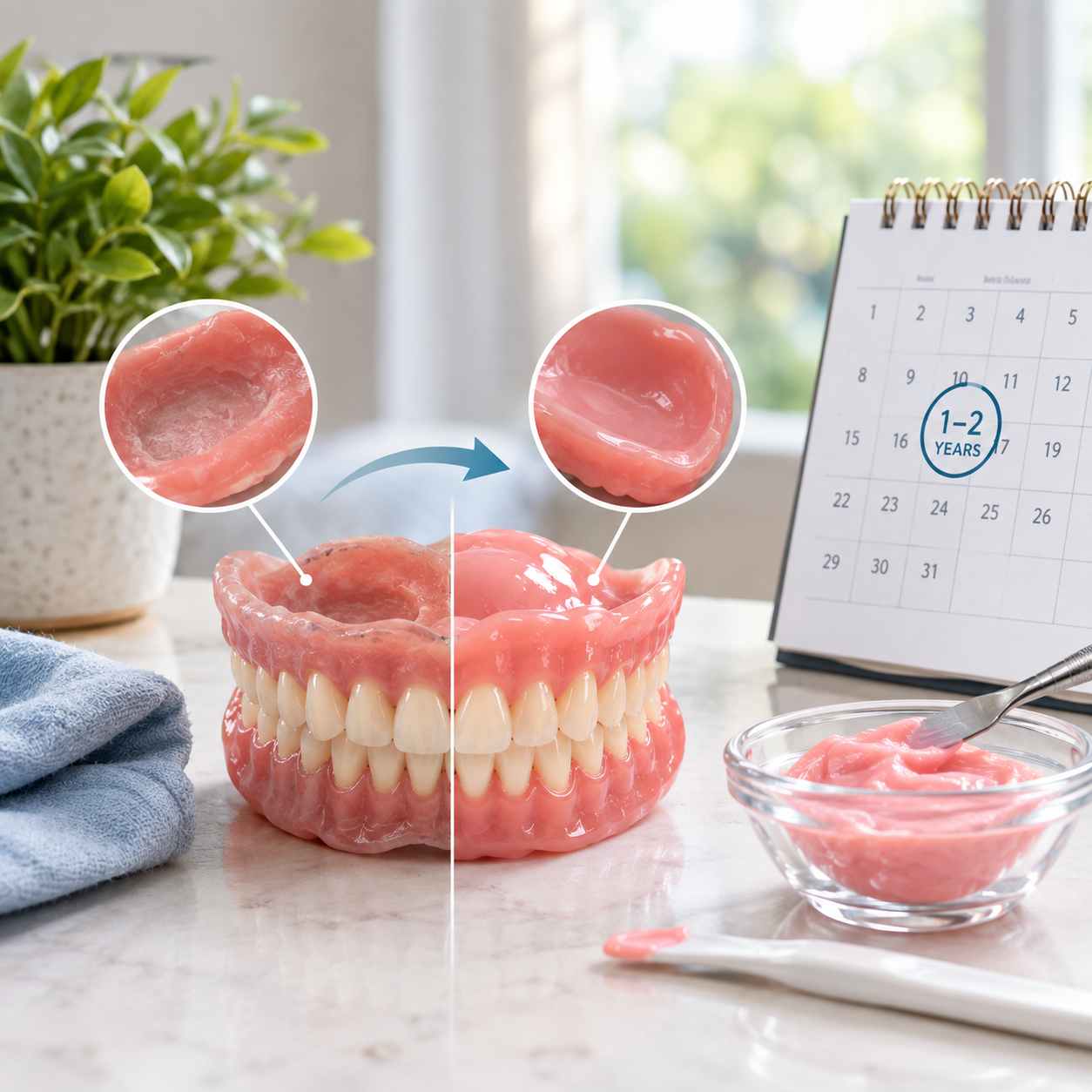
Soft and hard relines solve the same underlying problem through two very different paths, and picking the wrong one usually just means paying for the fix twice. If your denture has started slipping, rubbing, or trapping food, that is your gum tissue telling you it has changed shape since your last fitting. According to Cleveland Clinic, most people need a denture reline about every one to two years or whenever the fit noticeably shifts. At New Smile Dentures, our team examines your bite and gum tissue in person before recommending a soft reline, a hard reline, or a completely new fit, so you are never guessing which option is right for your mouth. If your denture has started feeling loose, book a free consultation with New Smile Dentures and get an honest answer about whether a soft reline or hard reline is the better move for you.
Frequently Asked Questions (FAQs)
1. How long does a soft reline typically last?
A soft reline usually lasts between six months and a year before it needs to be redone or upgraded to a hard reline.
2. Does a hard reline hurt?
No, a hard reline only involves taking an impression and adjusting the fit, so there is no pain involved.
3. Can I switch from a soft reline to a hard reline later?
Yes, many patients start with a soft reline while healing and move to a hard reline once their gums have stabilized.
4. How do I know if I need a soft reline or a hard reline?
A denturist checks your gum tissue and bite in person, since sensitive or healing gums usually call for soft relines while stable ridges suit hard relines.
5. Is a reline the same as getting a new denture?
No, a reline reshapes the fitting surface of your existing denture, while a new denture replaces the entire appliance.