
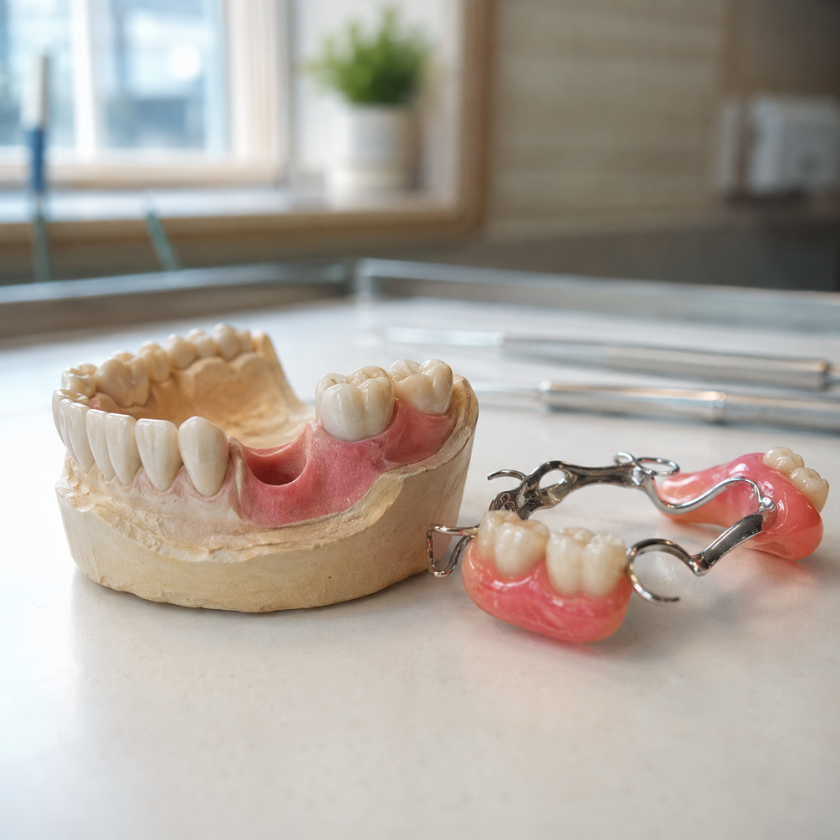


The Hidden Strain Behind Partial Dentures
A partial denture does not float in your mouth on its own. It hooks onto a handful of natural teeth through metal or flexible clasps, and those teeth now carry weight they were never built to handle alone. Every bite sends extra pressure through the clasp and into the tooth root, the gum line, and the bone underneath.
Over months, that added load can wear down enamel right where the clasp grips, open tiny gaps where plaque settles, and push the gum away from the tooth. Dentists call these the abutment teeth, the ones doing double duty as both chewing surfaces and anchor points. If they are not cleaned with extra attention, they often fail faster than the rest of your natural smile, which then forces a bigger, more expensive appliance down the road.
Daily Habits That Protect Your Natural Teeth
Brushing Around Every Clasp
Plaque builds up fastest where the clasp wraps around the tooth, a spot that a regular brushing pass tends to skip entirely. Angle the bristles under the metal arm and use small circular strokes instead of side-to-side scrubbing. A soft bristle brush works best here, since stiff bristles can bend the clasp out of shape over time. Spend an extra ten seconds on each abutment tooth before moving on, since that one habit alone prevents most of the decay dentists see in partial wearers.
Flossing still matters even with a partial in place. Use a floss threader or a small interdental brush to clean between the abutment tooth and its neighbour, since regular floss often cannot reach around the clasp. Do this once a day, ideally before bed, so food particles and bacteria do not sit against the gum overnight while the partial is soaking. Skipping this single step is one of the fastest paths to gum irritation around the appliance.
Rinsing And Soaking At Night
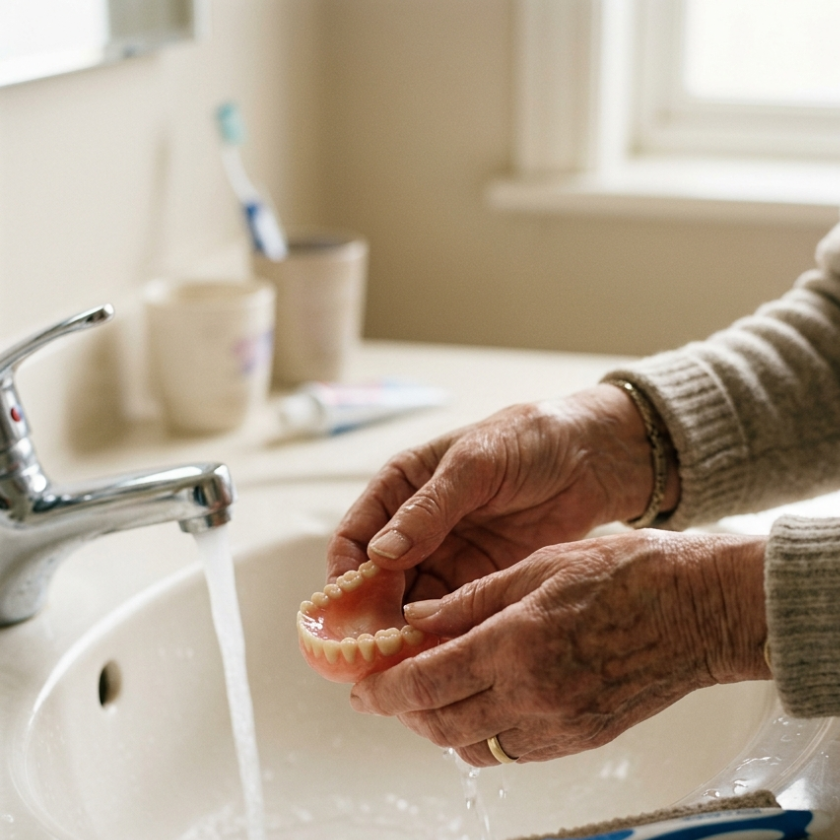
Take the partial out before bed every night and give your gums a real break. Rinse your mouth with plain water or a non alcoholic mouthwash to clear loose debris, then brush your remaining teeth as usual. Soak the appliance in a proper denture cleaning solution, never hot water, since heat can warp the plastic base and ruin the fit. In the morning, rinse the partial again before placing it back so cleaning solution residue does not sit against your gums all day.
Cleaning Routines Many Partial Wearers Skip

Most partial wearers brush daily, yet several smaller habits still slip through the cracks. These gaps do not cause problems overnight, but they add up across months and years, often showing up as a sore spot, a loose clasp, or a tooth that suddenly needs a filling. Here are the routines denturists flag most often during checkups:
- Brushing the part with regular toothpaste, which is abrasive enough to scratch the plastic base
- Rinsing or soaking the appliance in hot water instead of a room-temperature solution
- Sleeping with the partial in every night instead of giving the gums a break
- Skipping the brush on the tongue and roof of the mouth, where bacteria still collect
- Waiting until a tooth hurts before mentioning a loose or shifting clasp
None of these mistakes is dramatic on its own. Together, though, they shorten the life of both the appliance and the natural teeth holding it, which is exactly why a short daily routine matters more than an occasional deep clean.
Gum Disease Risk Tied To Your Missing Teeth
Partial tooth loss is more common among adults and seniors than most people assume. According to NIDCR's overview of partial and total tooth loss in adults and seniors, the prevalence of both partial and total tooth loss among adults and seniors has dropped since the early 1970s, though real disparities still exist between population groups. That long view matters for partial wearers specifically, since the natural teeth still in your mouth are the same teeth carrying the clasp and absorbing the extra bite pressure described earlier.
Warning Signs Your Partial Needs Attention
A partial denture should feel stable, not just tolerable. Soreness that lingers past the first week of wearing a new appliance, a clasp that feels loose, or a tooth that suddenly feels sensitive to cold are not things to wait out. Catching these early keeps a small adjustment from turning into a bigger repair or, worse, the loss of another natural tooth.
Signs Worth A Same Week Call
- A clasp that clicks, slides, or no longer grips the same tooth it used to
- Gum tissue that looks red, puffy, or bleeds when you brush around the partial
- A sore spot that does not fade after a few days of wear
- Visible cracking, chipping, or a base that no longer sits flush
- A bite that suddenly feels different from one side to the other
None of these signs means the partial has failed. Most are quick fixes when caught early, but they almost always get more expensive and more uncomfortable the longer they sit unaddressed.
Building A Care Routine You Can Stick To
A workable routine does not need to be complicated. Brush the partial and your remaining natural teeth after every meal if you can manage it, or at a minimum, morning and night. Floss or use an interdental brush around each abutment tooth once daily. Soak the appliance overnight in a proper denture solution rather than plain water. Book a checkup every six months so a denturist can check the fit, the clasps, and the health of the gum tissue underneath before small issues turn into bigger ones. Patients who stick to this simple pattern typically keep their natural teeth and their partial in service far longer than those who only think about either one when something starts to hurt.
Final Thoughts
A partial denture can serve you well for years, but only if the natural teeth holding it get the same attention as the appliance itself. Small daily habits, the right cleaning routine, and a denturist who checks the fit twice a year are what keep both working together instead of working against each other. If a clasp feels loose, a tooth feels sensitive, or it has simply been a while since your last checkup, New Smile Dentures offers a free consultation to look at your partial denture and the teeth supporting it before a small problem becomes a bigger, more expensive one. Book a visit at the Caldwell or Boise clinic and keep the smile you already have working the way it should.
Frequently Asked Questions (FAQs)
1. How often should a partial denture be cleaned?
Brush it after every meal if possible, and soak it overnight in a proper denture cleaning solution.
2. Can a partial denture damage natural teeth?
Yes, a poorly cleaned clasp area is the fastest way for the natural teeth supporting a partial denture to develop decay or gum disease.
3. Should a partial denture be removed every night?
Yes, taking it out overnight lets the gums recover and lowers the risk of irritation underneath the appliance.
4. What is safe to use when cleaning a partial denture?
A soft brush with a designated denture cleaner is safest, since regular toothpaste and hot water can damage the base.
5. How long does a partial denture typically last?
Most partial dentures last between five and eight years with daily care and regular checkups, though the timeline depends on how well the supporting natural teeth are maintained.