

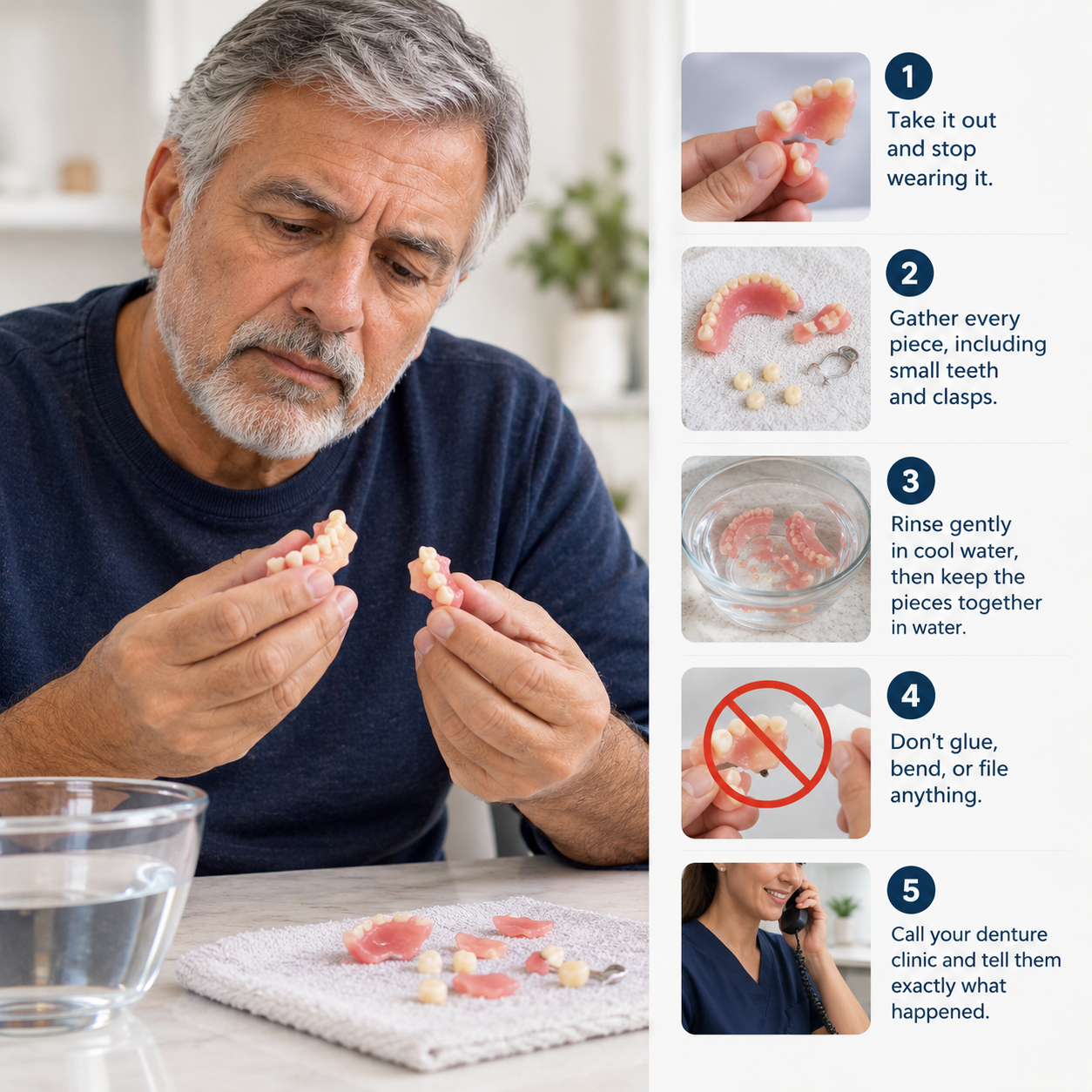





The Quick Version
- Take it out and stop wearing it.
- Gather every piece, including small teeth and clasps.
- Rinse gently in cool water, then keep the pieces together in water.
- Don't glue, bend, or file anything.
- Call your denture clinic and tell them exactly what happened.
Stop Wearing It and Find Every Piece
Take the denture out and leave it out, even if it still seems usable. A cracked or chipped denture can have a rough or sharp edge, and chewing on it can cut your gums or make the break worse. If it broke in your mouth or on the floor, look carefully for every fragment. A single tooth or a small piece of the base can decide whether a repair is straightforward, so check the floor, the sink, and the folds of any napkin it was wrapped in.
Rinse It Gently and Keep It Moist
Rinse the pieces in cool or lukewarm water to remove food and debris, and don't scrub. Then put everything in one clean container with water.
According to the American Dental Association's guidance on denture care and maintenance, dentures kept in water or a denture cleanser solution when they aren't being worn hold their shape and stay pliable instead of drying out, and they should never go into hot or boiling water, which can cause them to warp.
That second part matters here. Hot water to "clean up" a broken denture can warp the pieces so they no longer fit back together properly. Skip the hot tap, and don't try pressing the pieces together to see whether they match up. That's the clinic's job.
Resist the Urge to Fix It Yourself
This is the hardest advice to follow, because a clean break looks so easy to fix. A bit of glue, a firm squeeze, and it seems done.
According to Mayo Clinic News Network's guidance on careful denture handling, repairs shouldn't be attempted at home because they will likely cause damage, and fixing a cracked denture with hardware-store glue is a particularly bad idea because those glues contain harsh chemicals that aren't suitable for the mouth.
There's a practical problem on top of the safety one. Glue residue on the broken edges makes a professional repair harder, because the clean surfaces a lab needs to join the pieces precisely are no longer clean. Our piece on the risks of DIY denture repair goes into more detail. The same goes for bending a loose clasp back into shape or sanding a rough spot. Leave both alone.
Call Quickly, and Say What Happened
Phone the clinic as soon as you can, ideally the same day. When you call, it helps to be able to say:
- Whether it's a full or partial denture, and upper or lower
- Where it broke (down the middle, along the base, a tooth, a clasp)
- Whether any pieces are missing
- Roughly how old the denture is
That last detail matters more than people think.
According to the Cleveland Clinic's overview of denture types, care, and maintenance, you should make a dental appointment if your dentures are damaged, and damage, along with signs like looseness, pinching, or an age of more than 10 years, can mean it's time for replacement dentures.
A break in a young denture is usually a repair story. A break in an old, worn denture can be the last straw, and a good denturist will tell you honestly which one you're looking at.
Getting By Until It's Fixed
If you have an older pair of dentures tucked away, now is the time to use them. Otherwise, stick with soft foods cut into small pieces, and avoid anything that needs a firm bite. Denture adhesive won't hold broken pieces together, and it shouldn't be used to try. If your gums are sore from the break, rinsing gently with lukewarm water is enough. And if you wear a partial with a broken clasp, don't wear it until it's fixed, since the part meant to grip your natural teeth is exactly what's compromised.
What Happens at the Repair Visit
Your denturist will look at where and how it broke, check whether the pieces fit back together precisely, and decide whether a repair will hold or whether the denture has reached the point where replacement makes more sense. Many breaks can be fixed quickly, and our guide to same-day denture repairs walks through how that works. Cost depends on what broke, so it's worth asking for an estimate while you're on the phone.
After a repair, pay attention to how the denture feels. If the same spot breaks twice, that usually points to a fit or bite problem putting stress on that spot, and that deserves attention rather than another patch.
How to Avoid the Next Break
Most breaks come from a drop.
The same Mayo Clinic News Network guidance notes that dentures can break if dropped only a few inches, and recommends cleaning them over a folded towel in case they slip.
A towel on the counter, or a sink with a little water in it, takes five seconds and prevents most accidents. Beyond that, a denture that fits well takes less stress than one that has gradually loosened, so keeping up with relines on schedule is part of keeping it in one piece.
Broke One? Call Before You Try Anything
If your denture has broken, get in touch with us before anything else. Tell us what happened, and we'll tell you what to do next, and what to hold off on.

