




The One Rule: Keep Them Moist
According to Mayo Clinic's guidance on denture care and cleaning, most types of dentures need to stay moist to keep their shape, so they should spend the night in water or a mild denture-soaking solution, and you should check with your dentist about how to store yours properly.
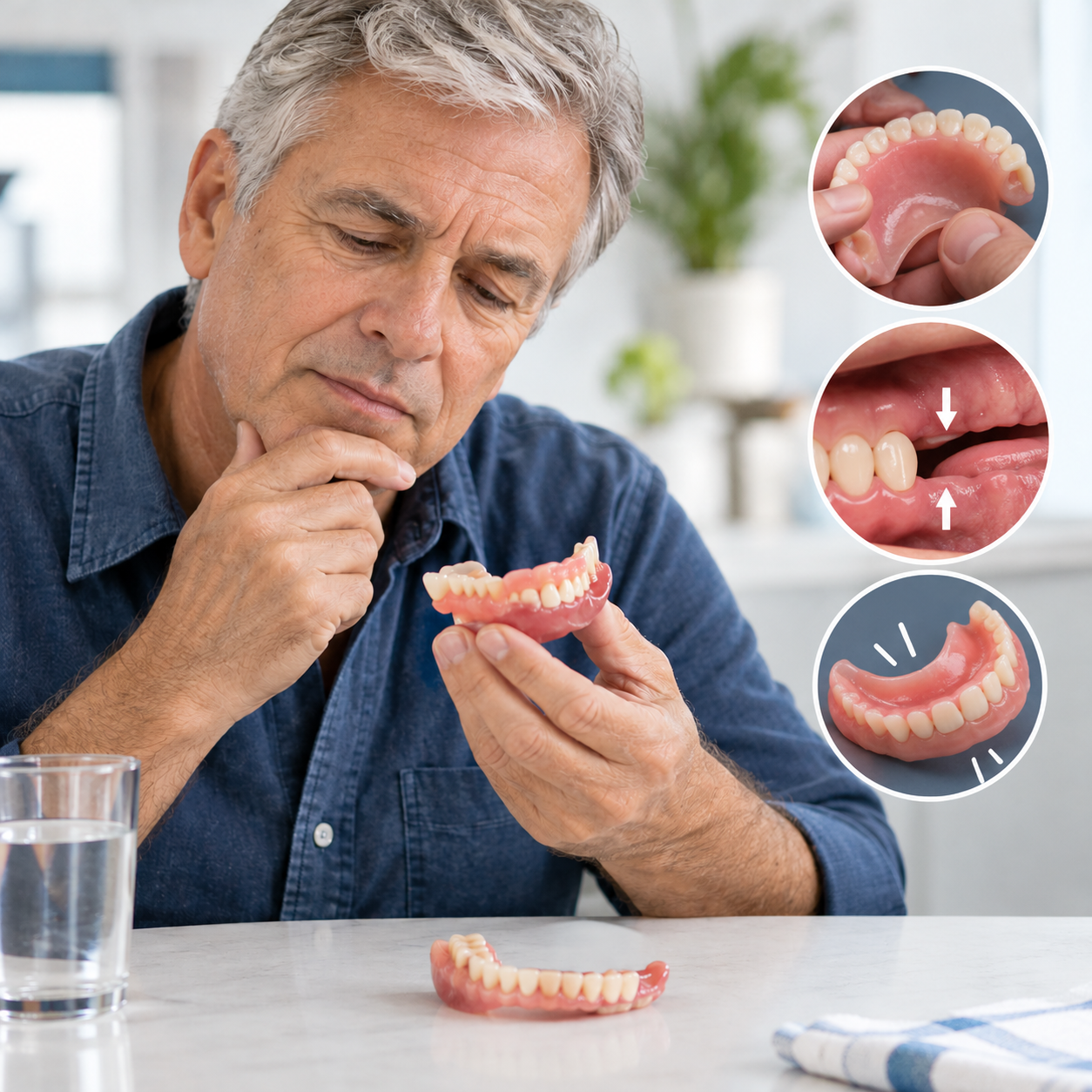
Your denture was shaped to your mouth, so even a small change in shape shows up as a fit problem. That's why a night in dry air is a bad idea. Leaving them on the counter, wrapped in a tissue, or in an open dish is the quickest way to find out.
Water or Soaking Solution?
Either works. Plain water is fine as long as the dentures are clean, and a denture-soaking solution gives you a deeper clean overnight. Go by the directions on the product you use.
According to Healthline's medically reviewed guide to cleaning and safely storing dentures, dentures should stay in water or a denture cleanser whenever they're out of your mouth to avoid warping, and plain water overnight is fine after cleaning if your cleanser's directions don't call for a prolonged soak. Products containing sodium hypochlorite bleach should never be used for more than 10 minutes.
If your tap water is hard, distilled water avoids the mineral deposits that can build up on a denture over time. And a quick cycle in an ultrasonic cleaner takes care of cleaning, but cleaning isn't storage. The dentures still need to stay moist overnight.
Use a lidded container made for dentures, and keep it separate from anything you drink out of. A drinking glass on a bathroom counter is how dentures get knocked into a sink or mistaken for something else.
What to Keep Them Away From
The same Mayo Clinic guidance on denture care advises against products that contain bleach, since they can weaken dentures and change their color, against soaking dentures with metal attachments in solutions that contain chlorine, and against hot or boiling water, which can bend dentures out of shape.
That's the short list of things that do damage overnight. Heat and bleach are the two that cause permanent harm. A warped denture doesn't go back to its original shape, and our guide to what can and can't be repaired explains why that's a problem.
Homemade soaks get recommended a lot, and it's worth knowing what the research says before you reach for the pantry.
The same Healthline guide to cleaning and storing dentures notes that research it reviewed found mouthwash and isopropyl alcohol damage dentures, while soaps, table salt, and vinegar are ineffective against the microorganisms found in plaque.
In short, a product made for dentures does the job and a kitchen substitute usually doesn't.
Special Cases
Partial Dentures With Metal Clasps
The chlorine warning above matters most here. If your partial has metal clasps or attachments, check your cleanser's label for chlorine before it goes in the container. Handle the clasps gently, too. They bend more easily than they look.
Flexible Partials and Other Materials
"Most types" of dentures need to stay moist, which is a polite way of saying materials differ. If you wear a flexible partial or something less common, ask your denturist how it should spend the night. It takes one question and can save you a replacement.
Immediate Dentures
Immediate dentures come with their own instructions for the first days, and those instructions win over anything general. Our sleeping guide covers that exception.
Traveling
A small lidded container and a bottle of water or a few denture tablets cover most trips. Don't wrap dentures in a tissue or napkin, which is how they end up in a hotel trash can.
A Simple Nightly Routine
- Take them out over a sink with a little water in it, or over a folded towel, in case they slip.
- Rinse off food and leftover adhesive.
- Brush gently with a denture brush and a cleanser made for dentures, not regular toothpaste, which can wear down denture material.
- Soak them in water or a denture solution, in a lidded container.
- Brush your gums, tongue, and palate while the dentures are out.
- In the morning, rinse them thoroughly before they go back in.
That last step has a safety reason behind it.
The same Mayo Clinic guidance on denture care notes that dentures should be rinsed thoroughly before they go back in your mouth, especially after a soaking solution, because these solutions can contain chemicals that cause vomiting, pain, or burns if swallowed.
Keep Them Safe From Everything Else
A denture within reach is a chew toy for a dog and an easy target for a sleeve brushing a counter. A closed container on a shelf or in a cabinet solves most of it. Keep it out of reach of small children, too.
If you notice a denture feels different in the morning than it did the day before, don't force it. That can mean it's changed shape or is starting to wear, and it's worth having looked at. Our denture repairs and relines team can tell you what's going on. Not sure what your particular set needs overnight? Ask us at your next visit, and we'll tell you exactly how to store it.

