





When Is It Time to Replace Your Full Dentures?
Your dentures might still look perfectly fine in the bathroom mirror. But what happens when they start moving during dinner, require more adhesive than they used to, or leave your gums sore after a few hours?
These are signs worth paying attention to.
Full dentures do not stay the same forever. Your jawbone and gum tissues continue changing after tooth loss, while the artificial teeth and denture base experience everyday wear. Eventually, the appliance that once fitted comfortably may no longer support normal eating, speaking, or daily activities.
Many people keep wearing their old dentures because they assume looseness and discomfort are simply part of getting older. Others spend money on repeated repairs without realizing that replacement may make more sense.
So, when is it actually time to replace your full dentures? The answer depends on more than their age. Let's look at the warning signs, what can still be corrected, and when starting with a new set is the better option.
How Long Should Full Dentures Actually Last?
One of the first questions patients ask is how many years they can expect their dentures to last.
You may have heard that dentures typically last between seven and ten years. This is a commonly quoted general range, and Cleveland Clinic provides a similar estimate. However, it should not be treated as a guaranteed lifespan for every patient.
The American College of Prosthodontists (ACP) recommends that removable dentures be evaluated for possible replacement when they have been in use for more than five years. This does not mean that every denture must be replaced immediately after reaching that point. It means the appliance should receive a proper clinical assessment.
Several factors influence how long dentures remain suitable:
- The materials used in the denture base and artificial teeth.
- How frequently the dentures are worn.
- Daily cleaning and storage habits.
- Changes in gum tissue and jawbone structure.
- The amount of pressure created during chewing.
- Previous repairs, adjustments, and relines.
- The overall condition of the denture.
A well maintained denture may continue functioning for years, while another may require replacement much earlier.
The better question is not simply how old your dentures are. It is whether they still fit properly, support normal function, and protect the health of your mouth.
7 Signs Your Full Dentures May Need Replacing
Your dentures usually provide several clues when they are approaching the end of their useful life. Some changes develop gradually, while others become noticeable after a crack, fracture, or sudden change in fit.
Here are seven signs that deserve attention.
1. Your Dentures Keep Slipping or Moving
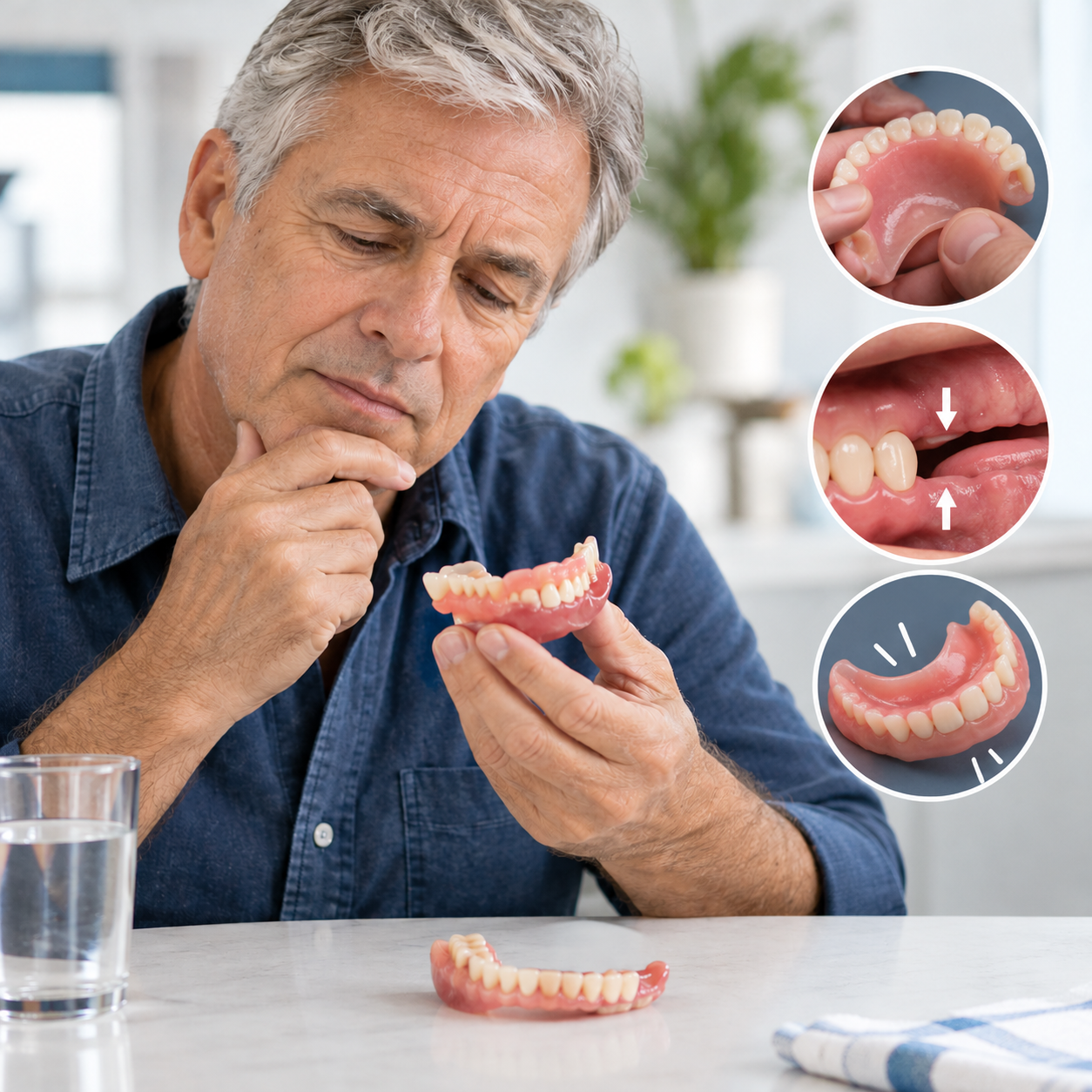
A denture should remain reasonably stable during normal activities. If it repeatedly moves while eating, talking, laughing, or opening your mouth, something may have changed.
Loose dentures are often associated with changes in the supporting jawbone and gum tissues. As the bone gradually loses volume, the shape of the ridge changes. The original denture base may no longer match the supporting surface.
Some movement may improve through an adjustment or reline. However, if the appliance has experienced substantial wear or no longer fits properly despite previous corrections, replacement may be worth considering.
2. You Experience Repeated Gum Sores
An occasional pressure spot can develop when someone first starts wearing dentures. Persistent or recurring sores are a different matter.
When a denture no longer distributes pressure properly, certain areas of the gums may receive more force than others. This can lead to redness, tenderness, inflammation, and ulceration.
Pay attention when:
- The same sore spot keeps returning.
- Your gums remain tender after removing the denture.
- You notice persistent redness beneath the appliance.
- Wearing your dentures becomes increasingly uncomfortable.
Do not ignore persistent sores or assume that your mouth simply needs more time to adjust. A professional examination is important to identify the cause.
Sometimes an adjustment resolves the problem. In other cases, the overall denture fit or condition may make replacement more appropriate.
3. Chewing Has Become More Difficult
Think about the foods you could comfortably eat when your dentures were first fitted.
Are those same foods becoming difficult to manage?
Worn artificial teeth can lose their original biting surfaces. Changes in the denture base and bite relationship can also affect how upper and lower teeth meet during chewing.
Patients may notice:
- Difficulty breaking down firmer foods.
- Pressure or soreness during meals.
- Food collecting beneath the denture.
- Increased movement while chewing.
- Avoiding certain foods altogether.
Chewing difficulty is not something you should automatically accept as normal denture aging.
Your provider can evaluate whether the problem involves the bite, denture stability, worn teeth, or changes in the supporting tissues.
For further information, read our guide on common problems with full dentures and how to fix them.
4. Your Artificial Teeth Show Significant Wear
Denture teeth experience repeated contact during chewing. Over time, their surfaces may become flattened, chipped, or worn down.
This is more than an appearance issue.
The shape of artificial teeth helps determine how the upper and lower dentures meet. When the chewing surfaces become excessively worn, the bite relationship can change.
You might notice that your dentures no longer meet comfortably or that your lower jaw seems to close differently than before.
In some cases, individual teeth can be repaired or replaced. When the wear affects several teeth or compromises the overall bite, a new denture may be the more appropriate option.
5. You Depend on More Denture Adhesive Than Before
Denture adhesive can help provide additional retention when used according to product instructions.
However, an increasing need for adhesive may indicate that your dentures are no longer fitting correctly.
For example, you might have previously worn your dentures comfortably without adhesive but now need to apply it several times throughout the day.
The American College of Prosthodontists identifies dependence on adhesive to eat or retain dentures socially, or needing it more than once daily, as a reason to evaluate the appliance for possible replacement.
Adding more adhesive does not correct a denture that has significantly lost its fit.
A professional examination can determine whether relining, adjustment, or replacement is appropriate.
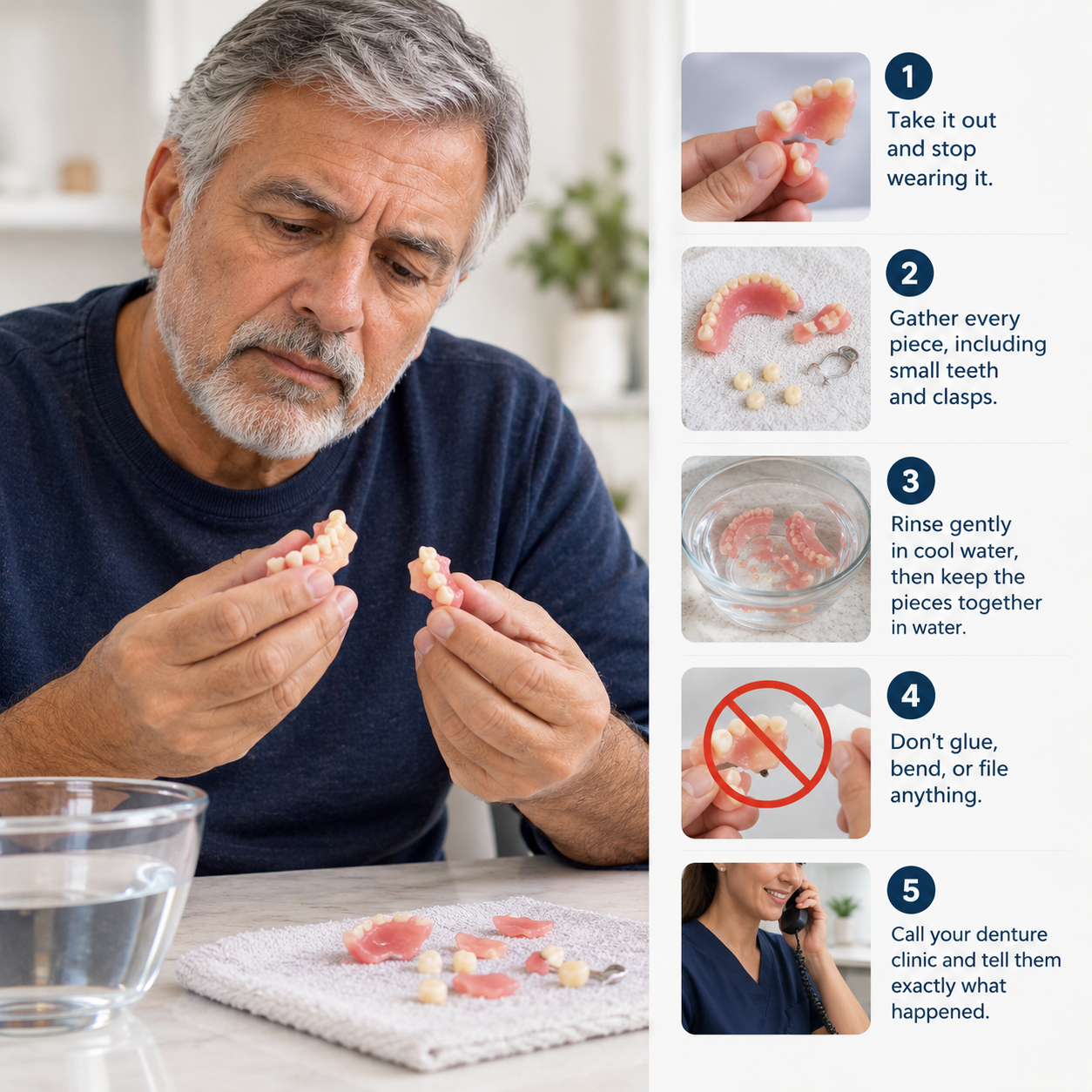
6. Your Dentures Have Cracks, Breaks, or Other Structural Damage
Visible damage should never be ignored.
A small crack may not initially affect the way a denture functions, but repeated chewing pressure can cause the damaged area to spread.
Look for:
- Cracks across the acrylic base.
- Chipped or missing artificial teeth.
- Broken or weakened sections.
- Changes in the denture's shape.
- Rough areas that irritate your gums.
Some damage can be repaired professionally. However, repeated fractures or extensive deterioration may indicate that the appliance is no longer suitable for continued use.
Avoid using household glue or attempting to reshape the denture yourself.
Our article on denture repairs and what can or cannot be fixed explains the difference between repairable damage and problems that may require a new appliance.
7. Your Facial Support or Appearance Has Changed
Full dentures do more than replace missing teeth. They also provide support for the lips and cheeks.
When dentures become significantly worn or their vertical dimensions change, the relationship between the upper and lower jaws can be affected.
Some patients notice that their dentures no longer provide the same support around the mouth. Their bite may feel different, or their facial appearance may seem less supported than before.
These changes can also be related to ongoing jawbone resorption, not simply denture wear.
A professional assessment can determine whether the issue is related to the appliance, the supporting tissues, or both.
Is It Better to Get a Reline or Completely New Dentures?
This is where many denture wearers become confused.
A denture that feels loose does not automatically need replacing. In some situations, a professional reline can improve the fit of an existing appliance.
The important thing is understanding what each treatment actually addresses.
Denture Adjustment
An adjustment involves modifying selected areas of the appliance to correct pressure points, minor interference, or bite problems.
It may be suitable when the denture is generally in good condition but needs a minor correction.
Denture Reline
A reline changes the inner surface of the denture that contacts the gums.
The purpose is to improve how the appliance fits against the current shape of the supporting tissues.
A reline can be useful when the denture remains structurally sound but has become loose because the mouth has changed.
Read our detailed guide on how often dentures should be relined to understand when this treatment may be appropriate.
Denture Repair
A repair addresses physical damage, such as cracks, fractures, or broken artificial teeth.
It may allow an otherwise suitable appliance to continue functioning without requiring complete replacement.
Complete Denture Replacement
Replacement involves making a new appliance rather than modifying the existing one.
It may be recommended when the denture has extensive wear, repeated structural problems, an unsuitable bite, or significant changes that cannot be corrected through ordinary maintenance.
Problem
Possible Solution
Minor pressure spot
Adjustment
Gradual loss of fit
Reline
Broken artificial tooth
Professional repair
Small crack in suitable denture
Repair assessment
Extensive base deterioration
Possible replacement
Severe tooth wear and changed bite
Possible replacement
Repeated fit problems despite relining
Replacement assessment
The decision should always follow an examination of the denture and supporting tissues.
Why Your Jawbone Changes Affect Denture Fit
One reason dentures eventually need attention is that the mouth does not remain the same after tooth loss.
Natural tooth roots provide stimulation to the jawbone. Following tooth extraction, the surrounding bone gradually remodels and can lose volume.
The amount and speed of this change vary between individuals.
As the residual ridge changes shape, the denture base may no longer make the same contact with the gums.
This can lead to:
- Reduced retention.
- Increased movement.
- New pressure areas.
- Changes in bite position.
- Difficulty maintaining stability.
This explains why even a professionally made denture may eventually require relining or replacement.
It is not necessarily a sign that the original denture was poorly fabricated. The anatomy supporting it has changed.
What Happens During a Full Denture Replacement?
Getting a new denture involves more than simply copying the old one.
The process starts with examining your current oral condition and determining what needs to change.
Step 1: Initial Examination and Consultation
Your provider evaluates the gums, supporting jawbone, existing denture, bite relationship, and any discomfort you have experienced.
This is also the time to discuss material options, tooth appearance, and treatment expectations.
Step 2: Impressions and Measurements
Impressions or digital records are used to capture the current shape of your mouth.
Jaw relationship measurements help establish the position of the upper and lower dentures.
Step 3: Tooth Selection and Trial Fitting
Artificial tooth size, shape, and shade are selected according to the treatment plan.
A trial fitting allows the patient and provider to assess appearance, bite, and speech before the denture is completed.
Step 4: Final Denture Placement
Once fabrication is complete, the new denture is fitted and checked.
Some adjustments may still be required as the mouth becomes accustomed to the appliance.
For a more detailed explanation, read our step by step guide to getting full dentures.
How to Make Your New Full Dentures Last Longer
Replacing your dentures is a significant decision, so it makes sense to take care of the next set from the beginning.
A consistent routine can help maintain the appliance and reduce avoidable damage.
Here are some useful habits:
- Clean your dentures every day with an appropriate nonabrasive denture cleanser.
- Brush all surfaces gently.
- Clean your gums, tongue, and palate.
- Store dentures according to the manufacturer's instructions.
- Avoid very hot or boiling water.
- Do not use household chemicals or abrasive cleaning products.
- Handle dentures carefully to prevent accidental drops.
- Attend regular professional evaluations.
- Address changes in fit before they become persistent problems.
The American Dental Association recommends daily denture cleaning and proper storage to help maintain the appliance and reduce plaque accumulation.
You can also read our guide on avoiding common denture cleaning mistakes.
Remember, proper care can help preserve your dentures, but it cannot prevent the natural changes that occur in your gums and jawbone.
How Much Does Replacing Full Dentures Cost?
The cost of new full dentures depends on several factors.
These include the materials used, artificial tooth construction, fabrication method, and the services included in the treatment package.
Some dentures use conventional acrylic bases and teeth, while others use composite materials or digital production methods.
When comparing prices, consider more than the initial amount.
Ask whether the package includes:
- Consultation and impressions.
- Trial fitting.
- Final fitting.
- Follow up adjustments.
- Manufacturer warranty.
- Future maintenance options.
New Smile Dentures offers different full denture packages based on material and construction choices.
You can review the current full denture prices and available options to understand the differences before discussing which option is appropriate for your needs.
The final treatment recommendation should consider oral health, fit, functional requirements, and budget together.
When Should You Schedule a Denture Evaluation?
You do not need to wait until your dentures break completely before seeking professional advice.
An evaluation is worth arranging when you notice persistent soreness, increasing movement, chewing difficulties, or significant wear.
The American College of Prosthodontists also recommends that removable dentures in use for more than five years be evaluated for possible replacement.
Even when no obvious symptoms are present, regular professional reviews help identify changes that may not be noticeable during everyday use.
If your dentures are already several years old, have required repeated repairs, or no longer feel the way they once did, it is worth having them examined.
The earlier a problem is identified, the more treatment options may be available.
Frequently Asked Questions (FAQs)
1. How often should full dentures be replaced?
There is no universal replacement schedule. Many patient resources cite an average lifespan of around seven to ten years, but actual replacement depends on fit, wear, damage, and oral health.
2. Can loose full dentures be repaired instead of replaced?
Yes. If the appliance remains structurally sound, an adjustment or reline may improve its fit without requiring a completely new denture.
3. Does jawbone loss mean I need new dentures?
Not necessarily. Bone changes can cause looseness, which may sometimes be corrected through relining. Extensive changes may require replacement.
4. Is it normal for older dentures to cause gum sores?
Persistent sore spots are not something to ignore. They may indicate pressure, poor fit, inflammation, or another oral health problem that needs examination.
5. Can worn denture teeth be replaced individually?
In some cases, yes. Individual artificial teeth may be repaired or replaced when the remaining denture is suitable for continued use.
6. Does using more adhesive mean my dentures need replacement?
Increased adhesive dependence may indicate a loss of fit. A professional examination can determine whether a reline, adjustment, or replacement is appropriate.
7. Can I continue wearing cracked dentures?
A cracked denture should be assessed promptly. Continuing to wear a damaged appliance may worsen the fracture or create irritation. Avoid attempting household repairs.
8. Should I replace my dentures if they are more than five years old?
Not automatically. The American College of Prosthodontists recommends an evaluation for possible replacement after five years of use, with the final decision based on clinical findings.
Final Thoughts
Your full dentures should support everyday activities, not make them harder. If eating has become uncomfortable, the appliance keeps moving, or sore spots continue returning, these are signs worth taking seriously.
Sometimes a simple adjustment or reline is enough. In other situations, worn materials, extensive damage, or major changes in the supporting tissues make a new set the better option.
The important thing is to understand what is actually happening before spending money on another repair or replacement.
At New Smile Dentures, patients can explore full dentures, denture repairs, relines, and other tooth replacement options based on their individual needs. With clinics serving Caldwell and Boise, the team provides denture services for patients throughout the Treasure Valley.
The right time to replace your dentures is not determined by age alone. It is determined by whether your current appliance still fits, functions, and supports your oral health.

