



How to Clean Dentures Properly Every Day?
That grainy texture on the back of your teeth is more than just a nuisance during your morning coffee. It is a sign that plaque is hardening into a stubborn layer that water alone cannot wash away. This unwanted buildup makes your dentures feel bulky and uncomfortable, often leading to raw spots on your gums and a dull look that hides your true personality. You worked hard for your smile, and you should be able to enjoy every meal without worrying about hidden debris or lingering scents. A healthy mouth gives you the freedom to speak up and laugh out loud with total certainty. Keeping your gear in top shape is the best way to ensure they stay as comfortable as the day you first put it on. We have gathered the most effective methods to help you maintain a spotless look without any stress.
Grab your brush and head to the sink because we are about to walk you through the professional way to get a deep clean at home.
Setting Up Your Morning Workspace For Success
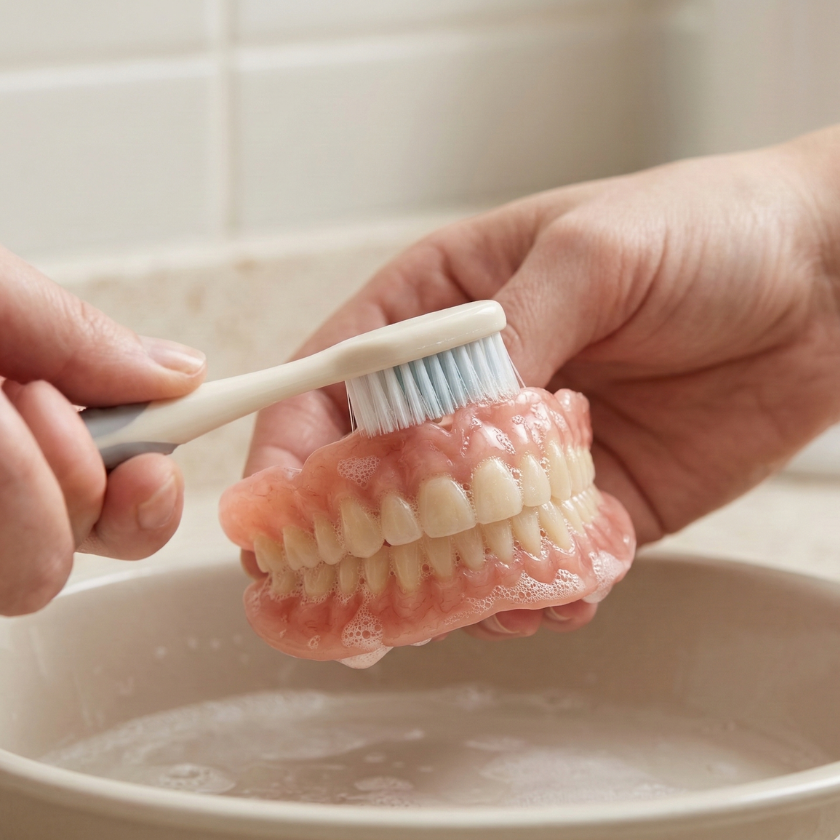
The first rule of a solid routine starts with a safety net because even the most sturdy dental plates are no match for a hard porcelain sink or a tile floor. You should always begin by filling the basin with a few inches of lukewarm water or laying down a soft, folded towel to act as a cushion in case of a slip. Many people skip this basic preparation only to end up with a cracked base or a chipped tooth that requires an urgent trip to the repair shop. By creating a gentle landing zone, you remove the physical stress of handling your investment when your hands are wet and soapy. This simple habit protects the shape of your teeth and ensures that a momentary lapse in grip does not turn into an expensive mistake. Once your workspace is ready, you can focus entirely on the washing process without the nagging fear of a break.
Clearing Away The Debris After Every Meal
Rinsing your mouth and your dentures immediately after eating is the most effective way to stop plaque from gaining a foothold. When food sits in the grooves of your dental work, it starts to ferment, which is exactly where those sour smells and bitter tastes come from.
You should hold your dentures under a steady stream of cool water to knock loose any seeds, bread crumbs, or sticky sugars that might be hiding. This quick action keeps the material from becoming a breeding ground for germs and ensures your breath stays as light and pleasant as possible throughout the day. According to clinical resources on oral hygiene, removing food debris is the first line of defense against gum inflammation.
The Right Tools For A Scrub Without Damage
- Soft Bristle Brush: You must avoid hard toothbrushes, which act like sandpaper and leave tiny scratches where bacteria love to hide.
- Non-Abrasive Paste: Regular toothpaste is often too gritty for acrylic and can strip away the natural shine of your teeth over time.
- Mild Dish Soap: A small drop of gentle soap is an excellent alternative for breaking down grease and oils without causing any chemical harm.
- Dedicated Basin: Keep a separate bowl for your cleaning sessions to avoid cross-contamination with other bathroom items.
Using the wrong equipment is a fast track to wearing down the surface of your smile, making it look dull and aged. A soft touch combined with the right supplies keeps the material smooth, which actually makes it harder for new stains to stick to the surface.
Breaking Down The Daily Soaking Strategy
Choosing Your Cleaning Solution
The liquid you choose for your nightly soak is just as important as the brush you use in the morning. A high-quality soaking tablet or a mild vinegar mix can reach into the microscopic pores of the material that a brush simply cannot touch. This chemical action breaks down the invisible film that causes your gums to feel itchy or sore.
Timing Your Overnight Bath
While it might be tempting to wear your teeth to bed, giving your gums a rest is vital for blood flow and tissue health. Letting your dentures soak for at least six to eight hours ensures that every corner is sanitized and ready for the next day. This downtime allows the soft tissues in your mouth to breathe and recover from the pressure of daily wear. General health guidelines suggest that removing prosthetics at night significantly reduces the risk of oral infections.
Temperature Control For Safety
You should never use boiling water under any circumstances because extreme heat can warp the base and ruin the way your teeth sit in your mouth. Lukewarm water is the sweet spot for dissolving cleaning agents without risking the structural integrity of the plastic. Keeping the temperature steady is the best way to ensure your fit remains consistent for years.
Maintaining Oral Hygiene Beyond The Teeth
Caring For Your Gums And Tongue
Cleaning your mouth is just as critical as washing the dentures themselves, as a healthy foundation is what keeps your smile stable. You should use a very soft brush or a damp washcloth to gently wipe your gums, the roof of your mouth, and your tongue every morning and evening.
The Danger Of Neglected Tissues
If you ignore the skin inside your mouth, a yeast infection known as thrush can develop, leading to white patches and a burning sensation. This condition makes wearing your dental plates nearly impossible and requires medical attention to clear up. By keeping your natural tissues clean, you ensure that the connection between your mouth and your dentures remains firm and comfortable.
A clean mouth acts as a shield against infections that can travel from your gums to the rest of your body. Taking those extra sixty seconds to refresh your palate makes a world of difference in how your teeth feel when you finally put them back in for the day.
For those looking for support, low-income dental assistance programs often provide resources for maintaining essential oral screenings.
Final Rinse And Inspection Before Wear
Before you slide your dentures back into place, a final thorough rinse under the tap is mandatory to remove any leftover chemicals from the soaking solution. Tasting the bitter residue of a cleaning tablet is an unpleasant way to start your morning and can sometimes cause a mild chemical burn on your tongue or cheeks. During this final wash, take a close look at the base and the teeth to check for any signs of wear, loose parts, or stubborn spots that might need a second pass with the brush. This last check gives you the peace of mind that you are walking out the door with a mouth that is truly sterile and a smile that is ready for anything.
Closing Thoughts
Reclaiming your confidence starts with the realization that your smile is more than just a set of teeth; it is your gateway to social freedom and daily comfort. When you commit to learning how to clean dentures properly every day, you are effectively erasing the stress of hidden stains and the worry of unexpected odors. This ritual acts as a daily refresh for your self-esteem, ensuring that every morning begins with a crisp, sterile feel that lasts until you close your eyes. You deserve a mouth that feels as light and natural as possible, and these simple steps are the most reliable way to stay ahead of plaque. Investing a few minutes tonight means waking up to a brighter, healthier version of yourself tomorrow, ready to face the world with a grin that never falters.
Every day you settle for a dull smile is a day you lose to hesitation. Stop letting poor fit or stains hold your joy hostage. Contact New Smile Dentures today to lock in your free consultation and secure a radiant, life-changing transformation before our schedule fills up!
Frequently Asked Questions (FAQs)
1. What is the safest way to avoid breaking my dentures during cleaning?
Always wash your teeth over a sink filled with water or a folded towel to provide a soft landing if they happen to slip.
2. Can I use a regular toothbrush to scrub the acrylic surface?
No, you must use a soft-bristled brush specifically designed for dental plates to avoid leaving deep scratches that trap dark stains.
3. How often should I replace the soaking solution in my container?
You need to use fresh water and a new cleaning tablet every single night to ensure your mouth stays free from harmful bacteria.
4. Why does my mouth feel dry and irritated after wearing my teeth?
This irritation is often caused by leftover cleaning chemicals, so always rinse your teeth thoroughly before putting them back in your mouth.
5. What is the best method for cleaning dentures properly every day?
The gold standard is a gentle morning brush combined with a full overnight soak in a non-abrasive, professional-grade solution to maintain total hygiene.