
.png)


Denture Implants vs Traditional Dentures: Which Is Right for You?
One question keeps coming up in dental offices across the country: Should I get denture implants or just go with traditional dentures?
It sounds simple. It isn't.
The wrong choice can mean years of slipping dentures, shrinking jawbone, surprise costs, and a smile that never quite feels like yours. Most people pick based on price alone, without knowing what they're actually signing up for long-term.
Here's the truth: both options work. But they work differently, for different mouths, different budgets, and different lifestyles. The gap between a good outcome and a frustrating one almost always comes down to how well a patient understood their options before making the call.
This article lays out exactly what separates these two paths, no fluff, no scare tactics, just the information you need to walk into your consultation knowing what to ask.
Traditional Dentures: What You're Actually Getting
Traditional dentures are removable appliances that sit directly on your gum tissue to replace missing teeth. They've been the standard solution for decades, and for good reason. They're accessible, non-surgical, and can be fitted relatively quickly after tooth loss.
Full dentures replace an entire arch of teeth. Partial dentures fill specific gaps when healthy natural teeth are still present. Both versions are taken out at night, cleaned separately, and worn during the day. For patients who aren't surgical candidates or who need an immediate solution after extractions, traditional dentures remain a practical and widely used option.
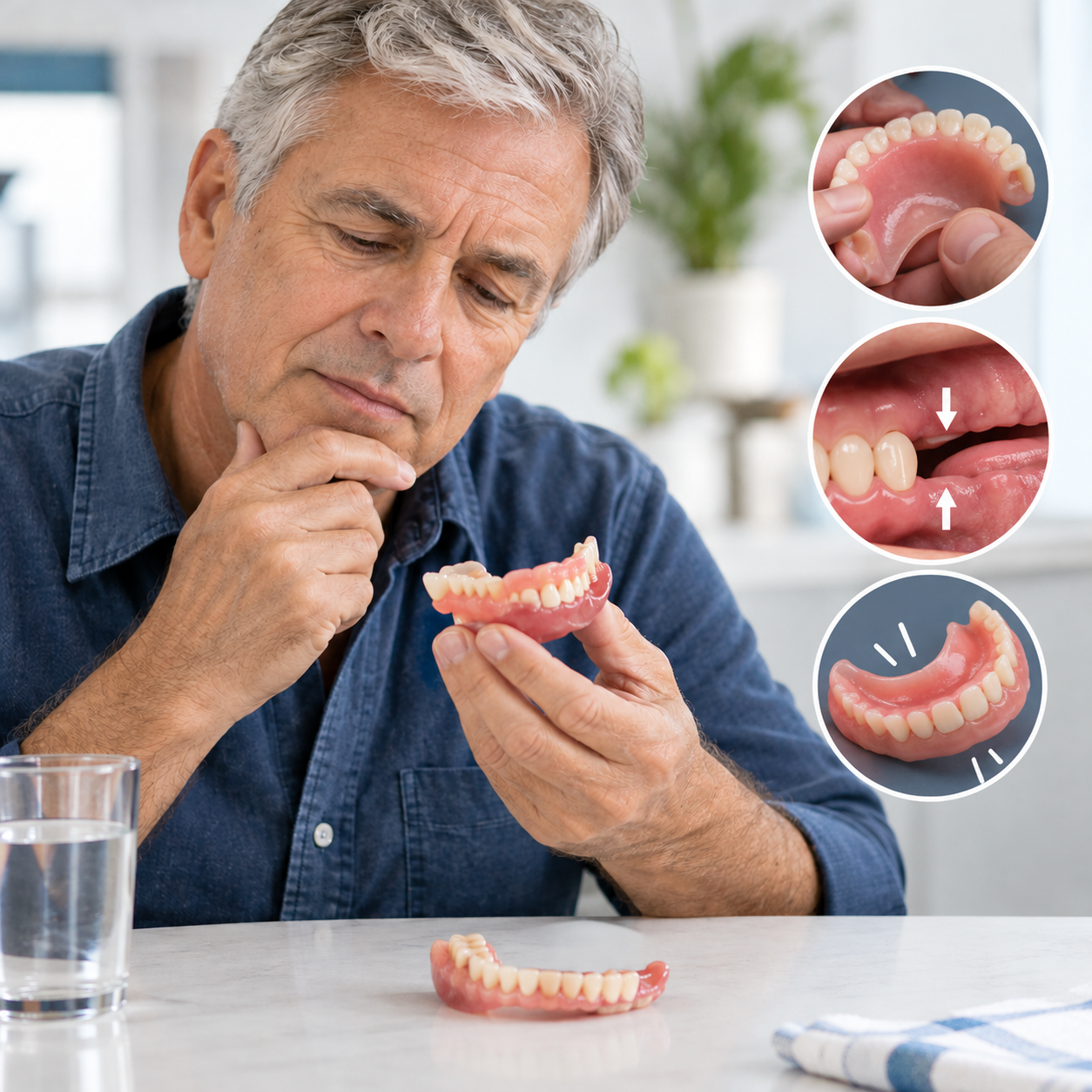
But here's what most people aren't told upfront: traditional dentures rest on soft tissue, and soft tissue changes. As the jawbone naturally shrinks after tooth loss, the fit of a traditional denture shifts with it. What feels snug in year one may feel loose and uncomfortable by year three.
According to the National Institute of Dental and Craniofacial Research on tooth loss in older adults, complete tooth loss remains significantly more common in adults over 65, a population for whom fit, stability, and ease of maintenance are especially important daily concerns.
That bone shrinkage isn't just a comfort issue. It changes the shape of your face over time. It affects how you chew. It affects how you speak. And it's the single biggest reason why denture wearers end up back in the clinic for relines, adjustments, and eventual replacements they weren't budgeting for.
Denture Implants: A Different Category Entirely

The Mechanical Difference That Changes Everything
Denture implants are not just a premium version of traditional dentures. They are a structurally different solution. Small titanium posts are placed directly into the jawbone through a surgical procedure. These posts fuse with the bone over time through a process called osseointegration, and once that bond forms, they act as artificial tooth roots.
The denture attached to those roots doesn't rest on your gums. It locks onto a foundation that's anchored in bone. That's the core difference. One option sits on tissue that changes. The other is integrated into the structure that holds.
What That Means for Bone Health
This is the part of the conversation that most patients wish they had heard earlier. When natural teeth are present, every bite you take sends stimulation down through the root and into the jawbone. That stimulation signals the body to maintain bone density in that area.
When teeth are gone, and nothing replaces that root-level stimulation, the body stops maintaining the bone. It resorbs. It shrinks. Traditional dentures don't change that process because they sit on top of the gum, not inside the bone.
Implants do. According to the Mayo Clinic's clinical overview of dental implant surgery and bone preservation, dental implants are the only tooth replacement option that stimulates the jawbone the way natural tooth roots do, actively working against the bone loss that follows extraction.
For younger patients or anyone expecting to wear their tooth replacement for fifteen or more years, this distinction is enormous.
The Cost Picture: Year One vs Year Ten
Upfront, traditional dentures cost significantly less than implant-supported options. That's real, and it matters. But the total cost comparison looks very different when you stretch the timeline out.
Traditional dentures typically need professional relining every two to three years as the jaw changes shape. They usually require full replacement every five to ten years. Add in adhesives, cleaning products, and unplanned adjustment visits, and the running total climbs steadily year after year.
Denture implants carry a higher initial investment that includes oral surgery, implant posts, healing time, and the final prosthetic. But once placed correctly and maintained well, they don't shift, don't require adhesive, and rarely need the kind of ongoing adjustments that traditional dentures demand.
For patients who plan to wear their replacement teeth for a decade or longer, the math on implants often starts to close the gap. The question isn't just what you can afford today. It's what you're willing to spend over the full lifespan of your smile.
Candidacy: Who Qualifies for Which Option
Not every patient is a surgical candidate, and not every patient needs implants. Here's a straightforward look at who typically fits each path.
Traditional dentures are often the right fit for:
- Patients with significant bone loss who no longer have enough density to support implant posts
- Individuals who need immediate tooth replacement right after extractions
- Patients with health conditions that make surgery too risky
- Those working within a strict upfront budget
Denture implants are typically a strong option for:
- Patients with adequate jawbone density confirmed through imaging
- Individuals who want a fixed, stable fit that doesn't move during daily activity
- People who are non-smokers or willing to stop smoking before and after surgery
- Patients thinking in terms of long-term oral health rather than short-term cost alone
A full evaluation, including bone density assessment and a review of overall health history, is required before any implant procedure can be recommended. Candidacy is not assumed; it's confirmed through examination.
Daily Life With Each Option (The Honest Comparison)
Living With Traditional Dentures
Traditional dentures require a daily routine that includes removal, soaking, and cleaning with a soft brush and mild soap. They should not be worn overnight as the gum tissue needs rest. Adhesives are often needed as the fit shifts over time, particularly for lower dentures, which have less surface area to grip.
Eating certain foods, particularly hard, crunchy, or sticky items, can be challenging. Speaking clearly takes adjustment, especially in the early weeks. Most patients adapt well, but the learning curve is real, and the ongoing maintenance is a permanent part of the routine.
Living With Denture Implants
Implant-supported dentures feel and function considerably closer to natural teeth. Because they're anchored in bone, they don't shift during meals or conversations. There's no adhesive. Eating a wider range of foods becomes possible again for most patients.
Cleaning requires brushing around the implant posts and using interdental tools to keep the tissue around each post healthy. This prevents a condition called peri-implantitis, which is an infection of the tissue surrounding the implant that can compromise the entire fixture if left untreated. The routine is manageable, but it requires consistency.
The Questions That Actually Matter Before You Decide
Most patients walk into a consultation thinking about price. The ones who walk out with the right answer thought about these questions first.
- How much usable bone do I currently have in my jaw?
- Am I medically cleared for oral surgery?
- What does my total budget look like over the next ten to fifteen years, not just today?
- How important is it to me to eat, speak, and smile without thinking about my dentures?
- Do I have health conditions like uncontrolled diabetes or a smoking habit that could affect healing?
Your answers to these questions, paired with a professional exam and imaging, will give you a clearer picture than any online article can. The goal isn't to push you toward the more expensive option. The goal is to make sure you understand what you're choosing and why.
Final Thoughts
Denture implants and traditional dentures both restore smiles. But they do it differently, and the difference matters more than most people realize before they choose.
Traditional dentures offer a proven, accessible solution for patients across a wide range of health situations and budgets. Denture implants offer a structurally stronger outcome, better bone preservation, and a fit that holds up over the years without the ongoing maintenance cycle that traditional options require. Neither is the wrong answer. The wrong answer is choosing without the full picture.
At New Smile Dentures in Boise and Caldwell, Idaho, our team takes the time to sit down with every patient before recommending anything. Whether denture implants are on your radar or you're just starting to explore your options, a free consultation with our licensed denturists gives you a real, honest starting point, no pressure, no guesswork.
Book yours today and take the first step toward a smile that actually fits your life.
Frequently Asked Questions (FAQs)
1. What exactly are denture implants?
Denture implants are titanium posts placed into the jawbone that anchor and hold a full or partial denture firmly in position.
2. How long do traditional dentures typically last?
With proper care, traditional dentures last between five and ten years before jaw changes require replacement.
3. Is the denture implant procedure painful?
The procedure is performed under local anesthesia, so pain during placement is minimal, with manageable soreness during recovery.
4. Why do traditional dentures get loose over time?
As the jawbone shrinks after tooth loss, the fit of traditional dentures shifts, causing them to loosen and require relining.
5. Do denture implants stop bone loss?
Yes, the implant posts stimulate the jawbone the way natural tooth roots do, helping to slow the bone loss that follows tooth extraction.